China's E-cigarette Exports to South Africa in October 2023

Market by 2FIRSTS.ai
Dec.04.2023
China's E-cigarette Exports to South Africa in October 2023
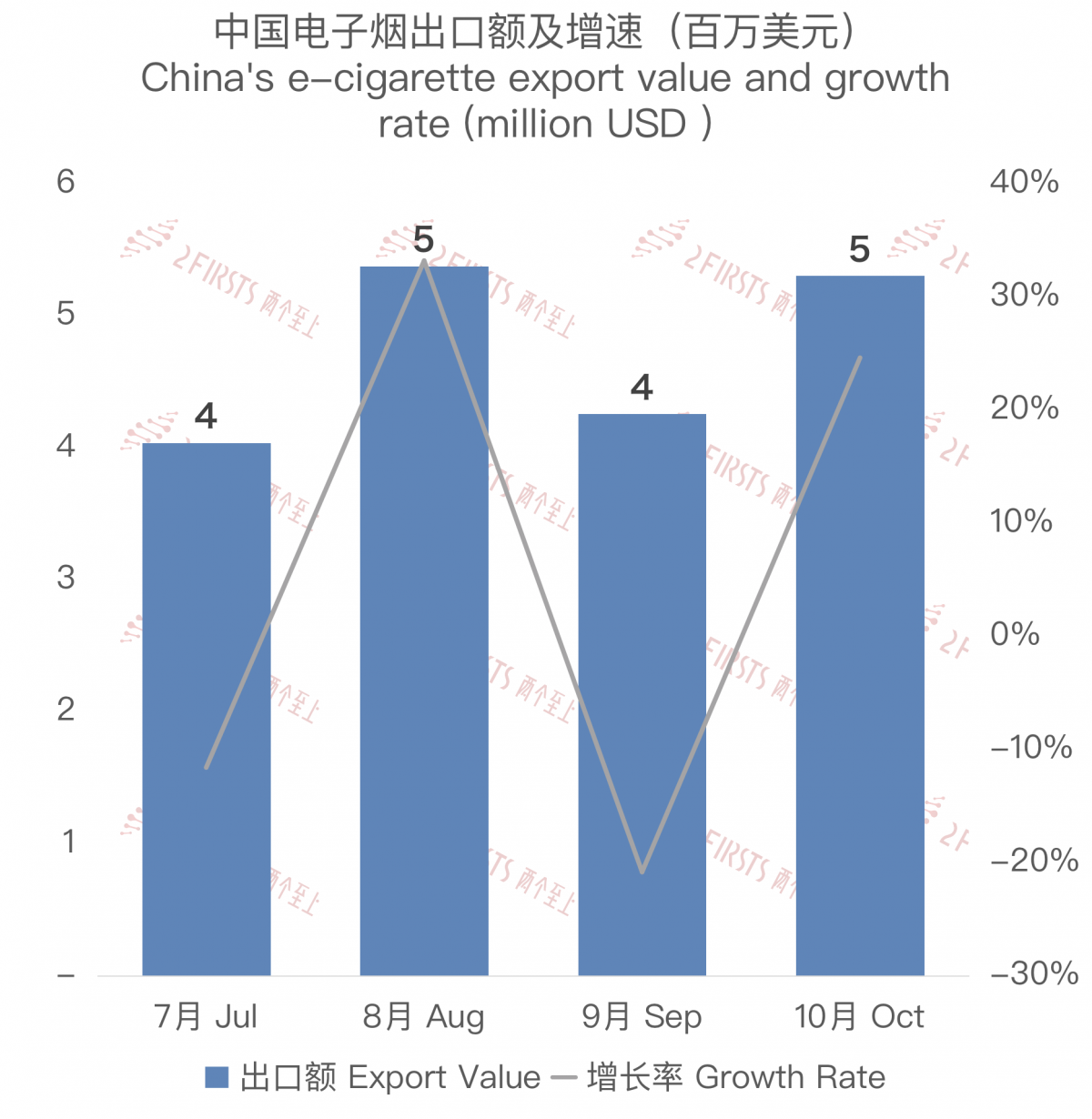
China's e-cigarette exports to South Africa in October 2023 reached $5.3 million, with a 24.59% MoM increase but a 10.39% YoY decrease.

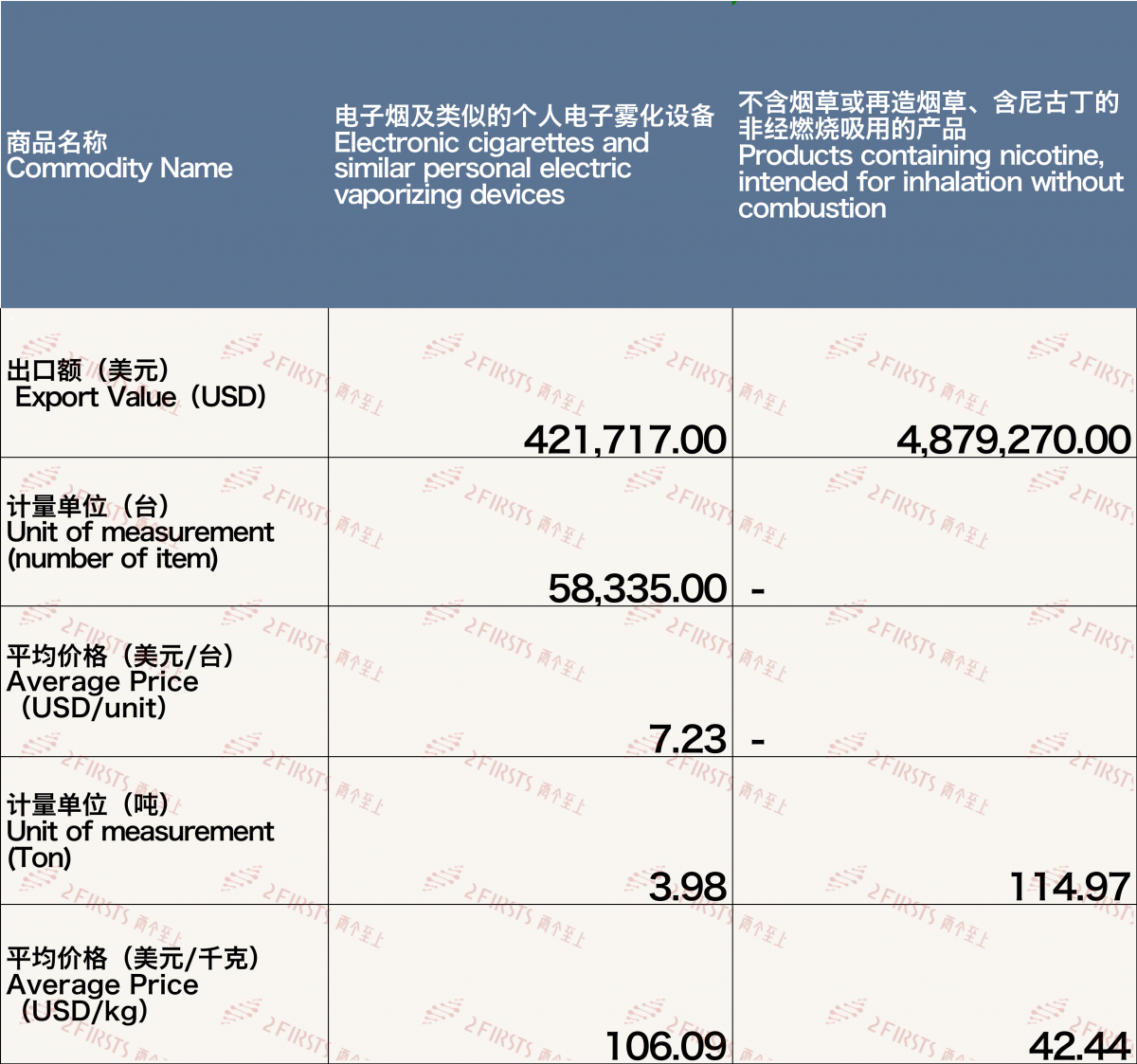
According to the updated trade data from the General Administration of Customs of the People's Republic of China, 2FIRSTS has compiled the e-cigarette export figures to South Africa for October 2023 as follows:
China's E-cigarette Exports to South Africa in October 2023
Image source: 2FIRSTS (Graphics by Mincy)


Export volume reached approximately $5.3 million, representing a sequential growth of 24.59% but a year-on-year decline of 10.39%.
China's E-cigarette Exports to South Africa in October 2023
Image source: 2FIRSTS (Mincy Graphics)


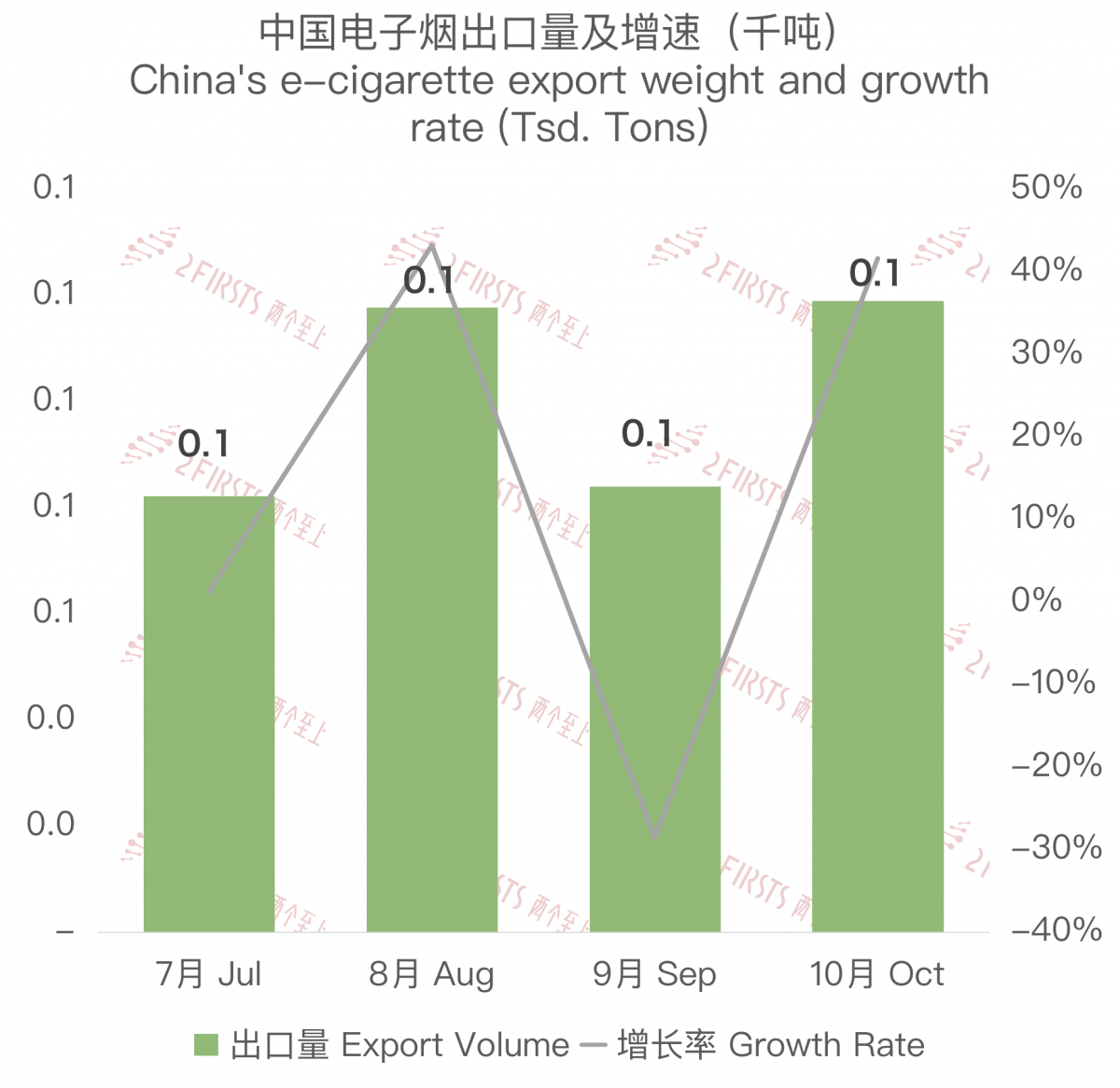
The export volume reached approximately 118.95 tons, showing a month-on-month growth of 41.85% and a year-on-year growth of 25.22%.
China's E-cigarette Exports to South Africa in October 2023
Image source: 2FIRSTS (Created by Mincy)


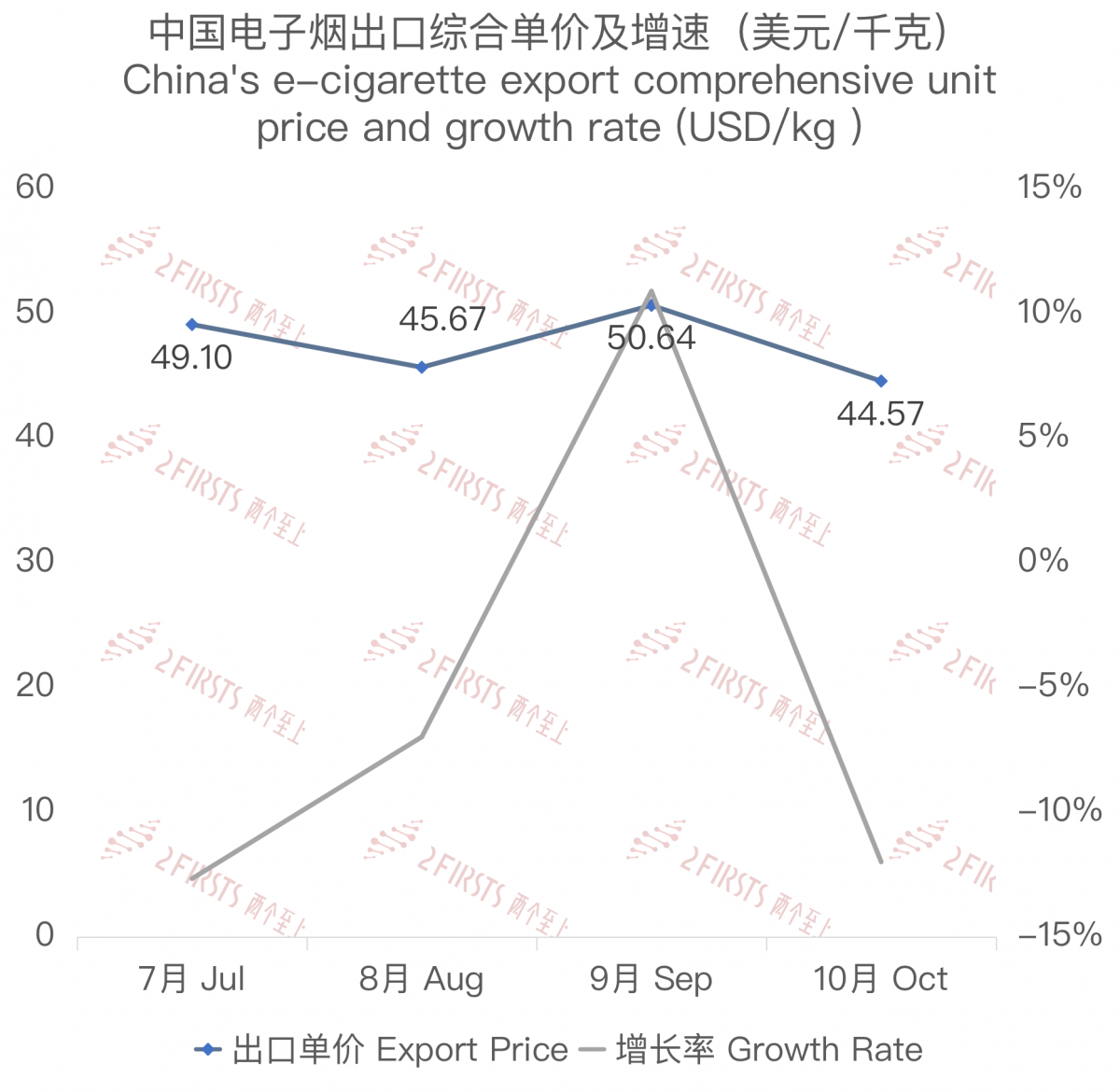
The export unit price decreased by 12.00% compared to the previous period and declined by 28.43% compared to the same period last year, reaching $44.57 per kilogram. The average price for "e-cigarettes and similar personal electronic vaporizers" was $7.23 per unit.
China's E-cigarette Exports to South Africa in October 2023
Image Source: 2FIRSTS (Created by Mincy)


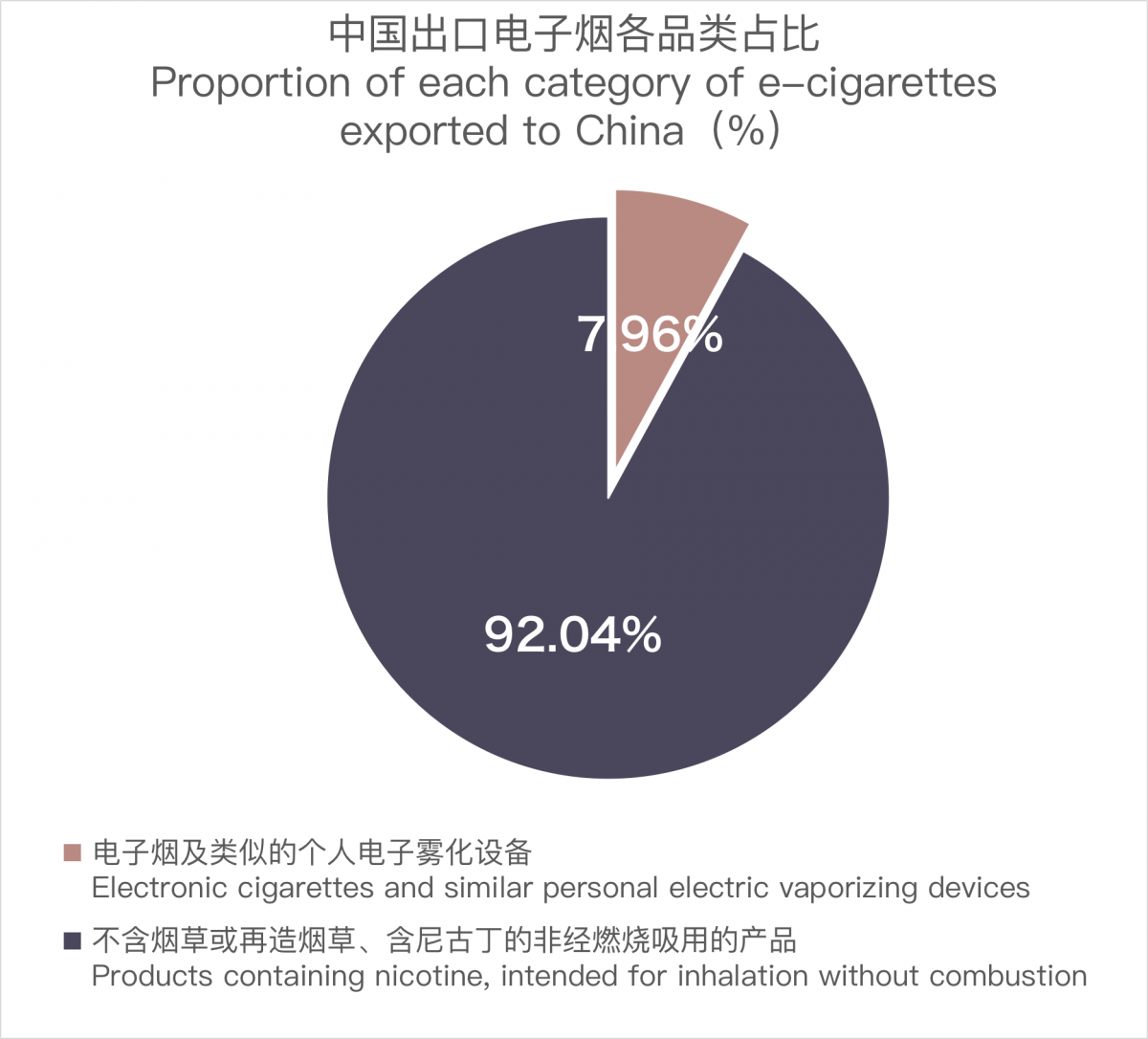
Among them, "e-cigarettes and similar personal electronic vaporizers" accounted for 7.96% of the export product categories, while "non-combustible products containing nicotine without tobacco or synthetic tobacco" accounted for 92.04%.
China's E-cigarette Exports to South Africa in October 2023
Image Source: 2FIRSTS (Mincy Graphics)


We welcome news tips, article submissions, interview requests, or comments on this piece.

Please contact us at info@2firsts.com, or reach out to Alan Zhao, CEO of 2Firsts, on LinkedIn


Notice

1.  This article is intended solely for professional research purposes related to industry, technology, and policy. Any references to brands or products are made purely for objective description and do not constitute any form of endorsement, recommendation, or promotion by 2Firsts.

2.  The use of nicotine-containing products — including, but not limited to, cigarettes, e-cigarettes, nicotine pouchand heated tobacco products — carries significant health risks. Users are responsible for complying with all applicable laws and regulations in their respective jurisdictions.

3.  This article is not intended to serve as the basis for any investment decisions or financial advice. 2Firsts assumes no direct or indirect liability for any inaccuracies or errors in the content.

4.  Access to this article is strictly prohibited for individuals below the legal age in their jurisdiction.


Copyright


This article is either an original work created by 2Firsts or a reproduction from third-party sources with proper attribution. All copyrights and usage rights belong to 2Firsts or the original content provider. Unauthorized reproduction, distribution, or any other form of unauthorized use by any individual or organization is strictly prohibited. Violators will be held legally accountable.

For copyright-related inquiries, please contact: info@2firsts.com


AI Assistance Disclaimer


This article may have been enhanced using AI tools to improve translation and editorial efficiency. However, due to technical limitations, inaccuracies may occur. Readers are encouraged to refer to the cited sources for the most accurate information.

We welcome any corrections or feedback. Please contact us at: info@2firsts.com

Japan Survey Finds 49.5% Would Cut Tobacco Use if Prices Rise, 64.6% Show Interest in Nicotine-Free Alternatives
A September online survey commissioned by Japanese smoking-accessories company Lightec found that 49.5% of respondents would consider reducing tobacco use if prices rose further, while 25.1% would consider switching to cheaper brands and 14.5% would consider using or combining alternatives such as vapes and nicotine-free herbal sticks. Another 64.6% expressed some level of interest in such alternatives. The survey covered 1,088 respondents aged 20 to 70 and was conducted by a company that sells NICOLESS nicotine-free vaping and herbal-stick products, meaning its findings should not be treated as representative of Japan's smoking population.
DATA
Oct.12
UK HMRC Unveils Red and Yellow Transitional Vape Duty Stamps Ahead of October Tax Launch
HM Revenue & Customs (HMRC) has released sample images of the UK’s transitional vaping duty stamps, showing red and yellow versions ahead of the new Vaping Products Duty and Vaping Duty Stamps Scheme starting on October 1, 2026. Transitional stamps contain physical security features but no digital scanning function. Approved businesses may purchase them through November 30 and affix them through December 31. HMRC has not stated that the red and yellow samples represent different product categories or tax statuses.
Regulations
Sep.02
Australia Extends Illicit Tobacco Crackdown From Tougher Penalties to Customs and Logistics Supply Chains
Australia's federal government introduced a new illicit tobacco enforcement bill on September 10 that would strengthen evidentiary presumptions, representative sampling, seizure and forfeiture procedures, proceeds-of-crime powers and obligations for customs and logistics operators. The proposal follows the Combatting Illicit Tobacco Act 2026, which took effect in August and increased penalties while expanding investigative and asset-recovery tools. Together, the reforms extend Australia's crackdown from tougher criminal sanctions into import, logistics and evidentiary enforcement.
Sep.14
JTI Invests ₱2.1 Billion to Upgrade Batangas Manufacturing Hub, Adds First Southeast Asia DIET Facility
JTI Asia Manufacturing Corp. has invested ₱2.1 billion, or about $37 million, in its manufacturing site in Malvar, Batangas, Philippines, to expand tobacco-processing capabilities. About ₱1.9 billion is allocated to JTI's first Dry Ice Expanded Tobacco, or DIET, facility in Southeast Asia, while more than ₱177 million has been spent on expanding its Controlled Atmosphere treatment facility. The Batangas plant supplies the Philippine market and exports to 22 overseas markets, making it one of JTI's key manufacturing hubs in Asia.
Sep.24
Kelly White Bets on Female Consumers as Nicotine Pouch Competition Intensifies | 2Firsts Interview
Swedish nicotine pouch brand Kelly White is building its strategy around adult female consumers. Founder and CEO Sophia Wilsby told 2Firsts that women accounted for around 70% of the brand’s repeat customers on HAYPP in Sweden in 2025. The interview explores female consumer segmentation, product and design differentiation, gender stereotypes, packaging regulation, and how independent brands can compete with global players such as ZYN and VELO while considering funding, partnerships and future ownership options.
Business
Sep.24
Cochrane 2026 Update Adds Nine Trials, Keeps High-Certainty Finding That Nicotine E-Cigarettes Improve Quit Rates Over NRT
Cochrane’s 2026 update of its living review on electronic cigarettes for smoking cessation included 80 randomized controlled trials involving 29,861 adult smokers, with nine trials added in this update. The review retained its high-certainty conclusion that nicotine e-cigarettes increase smoking cessation rates compared with nicotine replacement therapy. In absolute terms, about 10 in 100 people using nicotine e-cigarettes may quit smoking for at least six months, compared with about 6 in 100 using NRT. The review found no clear difference in serious adverse event rates between the two groups, while longer-term safety and the relative effectiveness of newer device types remain less certain.
Sep.07