Durham County Council Seizes Illegal E-cigarettes Worth 5260 Pounds

Regulations by 2FIRSTS.ai
Dec.11.2023
Durham County Council Seizes Illegal E-cigarettes Worth 5260 Pounds
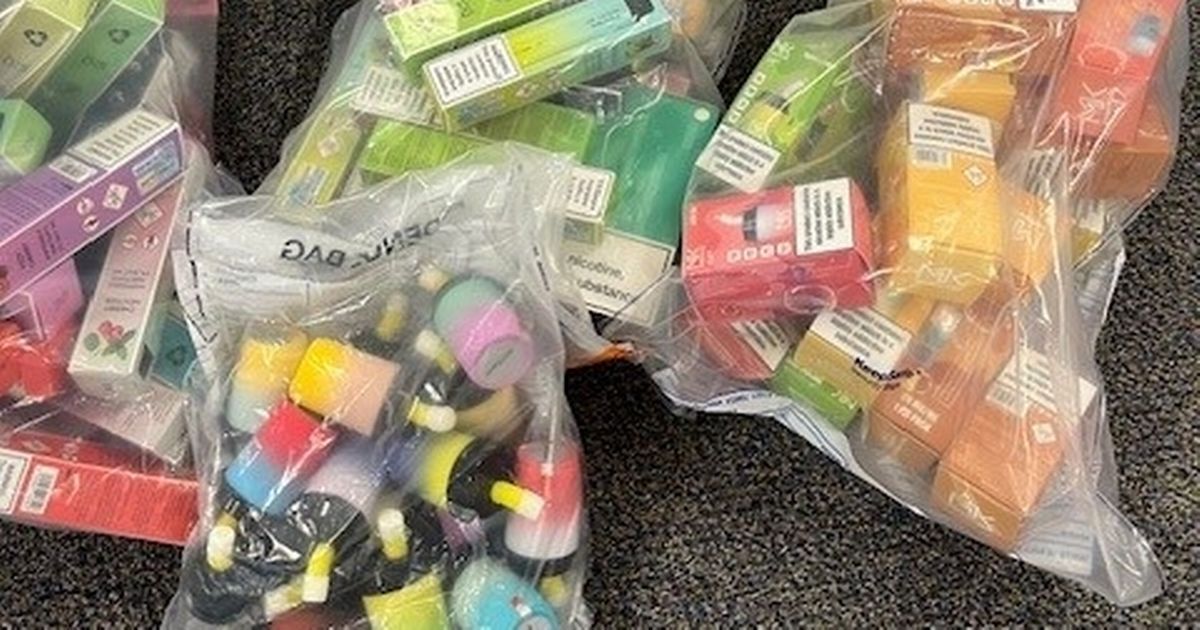
Durham County Council officials recently seized 526 e-cigarettes worth £5260 from 8 shops for breaking trading standards.

In recent news, it has been reported by Chroniclelive that trade standards officials from Durham County Council in the United Kingdom conducted on-site inspections of eight stores and confiscated a total of 526 e-cigarettes with a combined market value of £5260 (approximately CNY 47000). Some of these products were designed to appeal to children, featuring shapes resembling coffee cups or adorned with cartoon decorations, with the intention to attract underage customers.


The reasons for the confiscation included the e-cigarette containers exceeding the legal limit of 2 milliliters and the products' packaging not displaying the required health warnings. Additionally, during a joint operation by Durham Police, coffee cup-shaped e-cigarettes were also among the seized products.


Selling e-cigarette products in the shape of food or beverages is illegal according to regulations.


Ian Harrison, the manager of the Business Compliance department at Durham County Council, stated:


We hope to remind parents and caregivers to be cautious about such products. We will continue working with our partners to remove illegal products from the market, and retailers can always consult with us if they have any concerns about product compliance.


According to UK law, it is prohibited to sell nicotine products to individuals under the age of 18, and there are restrictions on the amount of nicotine and e-liquid that can be contained in disposable e-cigarettes. Since March of last year, trading standards officials in Durham have seized approximately 6636 illegal e-cigarettes, estimated to be worth £79,632 (around 720,000 Chinese yuan).


We welcome news tips, article submissions, interview requests, or comments on this piece.

Please contact us at info@2firsts.com, or reach out to Alan Zhao, CEO of 2Firsts, on LinkedIn


Notice

1.  This article is intended solely for professional research purposes related to industry, technology, and policy. Any references to brands or products are made purely for objective description and do not constitute any form of endorsement, recommendation, or promotion by 2Firsts.

2.  The use of nicotine-containing products — including, but not limited to, cigarettes, e-cigarettes, nicotine pouchand heated tobacco products — carries significant health risks. Users are responsible for complying with all applicable laws and regulations in their respective jurisdictions.

3.  This article is not intended to serve as the basis for any investment decisions or financial advice. 2Firsts assumes no direct or indirect liability for any inaccuracies or errors in the content.

4.  Access to this article is strictly prohibited for individuals below the legal age in their jurisdiction.


Copyright


This article is either an original work created by 2Firsts or a reproduction from third-party sources with proper attribution. All copyrights and usage rights belong to 2Firsts or the original content provider. Unauthorized reproduction, distribution, or any other form of unauthorized use by any individual or organization is strictly prohibited. Violators will be held legally accountable.

For copyright-related inquiries, please contact: info@2firsts.com


AI Assistance Disclaimer


This article may have been enhanced using AI tools to improve translation and editorial efficiency. However, due to technical limitations, inaccuracies may occur. Readers are encouraged to refer to the cited sources for the most accurate information.

We welcome any corrections or feedback. Please contact us at: info@2firsts.com

Fiscal benefit, not health, strongest indicator for vape bans – Contributed by Samrat Chowdhery
Data shows 75% of nations with state stakes in tobacco trade ban modern substitutes compared to 10% in the free-market group. What is driving these divergent regulations?
Feb.04
HB 5437 “Vape Safety Act” advances in House committee, proposing statewide licensing for vape shops
A committee substitute for House Bill 5437, the Vape Safety Act sponsored by Del. David McCormick (David McCormick), was recommended Monday afternoon by the House Health and Human Resources Committee to the full House, with the bill next heading to the House Judiciary Committee. HB 5437 would require specialty shops selling tobacco, tobacco-derived products, alternative nicotine, or vapor products and accessories to obtain a state license from the Alcohol Beverage Control Administration (ABCA)
Feb.26 by 2FIRSTS.ai
Singapore Health Minister Ong Ye Kung receives SEATCA award for tobacco control and anti-vaping push
SEATCA has honoured Singapore Health Minister Ong Ye Kung with its inaugural Trailblazer Award, citing Singapore’s long-standing vaping ban, stepped-up enforcement and regulatory measures, and the city-state’s role in sharing tobacco-control policy experience across ASEAN.
Feb.06 by 2FIRSTS.ai
Nebraska Lawmakers Consider Major Tax Hikes on Cigarettes, Vapes and Other Nicotine Products
Nebraska lawmakers are considering two tax bills targeting nicotine products. LB1124 would raise the cigarette tax from $0.64 to $1.64 per pack, while LB1238 would shift cigarettes to a 30% tax on the retailer’s purchase price and increase taxes on alternative nicotine and other tobacco products to 30%. The commentary argues the hikes could raise consumer costs, pressure small retailers, and increase cross-border shopping and illicit market activity.
Feb.04 by 2FIRSTS.ai
IMF Article Sets Out Three Principles: Cover All Harmful Products, Match Tax Rates to Harm, Improve Cross-Border Coordination
A March 2026 article in Finance & Development, “Taxing Harmful Habits,” argues that taxes on harmful products such as tobacco, alcohol and sugary drinks should better reflect the health harm they cause. The authors propose three principles: capture all harmful products, align tax rates with health harm, and strengthen cross-border coordination to reduce evasion and smuggling.
Mar.24 by 2FIRSTS.ai
BAT CEO Says 2026 Return to Growth Hinges on U.S. Enforcement, Highlights Oral Leadership
British American Tobacco said 2026 will mark a return to its mid-term growth algorithm, but CEO Tadeu Marroco stressed that deliverywill depend heavily on enforcement against illicit vapour products in the United States. Speaking at the FY2025 results call, he positioned Modern Oral as the company’s primary structural growth engine, reframed accelerating cigarette declines through “poly-usage,” and reinforced capital discipline with an expanded share buyback plan.
Feb.12