South Korean city begins smoke-free zone inspections, fines e-cigarette use

Oct.22.2024
South Korean city begins smoke-free zone inspections, fines e-cigarette use
South Korean city launches smoke-free zone inspections at public facilities, fines violators through late November.

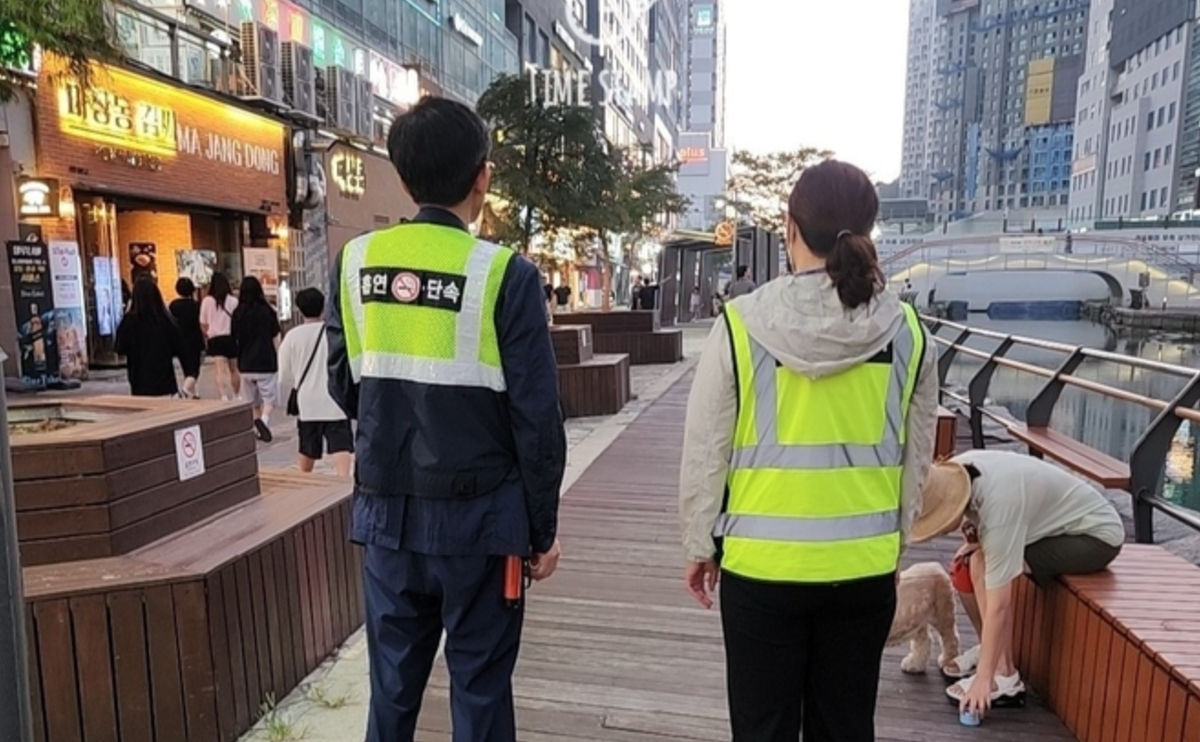
Incheon, South Korea will work with 10 districts to conduct joint inspections of smoke-free areas in public facilities by the end of November, according to KG News on October 21.


This inspection mainly targets the designated no-smoking areas and cigarette vending machines according to the National Health Promotion Law and regulations in various districts and counties. Any smoking behavior (including e-cigarettes) found in no-smoking areas will be fined.


In August of this year, the city expanded and added new smoking ban areas due to the revision of the "National Health Promotion Law." These include the areas surrounding educational facilities (kindergartens, daycare centers, elementary and secondary schools), bus and taxi stands where smoking is frequent, smoking-free streets, urban parks, squares, and smoking ban zones within apartments. In these areas, the city government will conduct focused inspections.


In addition, the city government will also inspect the adherence of no-smoking area signage (stickers) on smoking ban facilities, including cigarette vending machines, and the compliance of smoking rooms with facility standards.


A spokesperson for the municipal government said, "We plan to continue promoting and cracking down on smoking in smoke-free areas, encouraging citizens to actively participate in creating a smoke-free environment."


We welcome news tips, article submissions, interview requests, or comments on this piece.

Please contact us at info@2firsts.com, or reach out to Alan Zhao, CEO of 2Firsts, on LinkedIn


Notice

1.  This article is intended solely for professional research purposes related to industry, technology, and policy. Any references to brands or products are made purely for objective description and do not constitute any form of endorsement, recommendation, or promotion by 2Firsts.

2.  The use of nicotine-containing products — including, but not limited to, cigarettes, e-cigarettes, nicotine pouchand heated tobacco products — carries significant health risks. Users are responsible for complying with all applicable laws and regulations in their respective jurisdictions.

3.  This article is not intended to serve as the basis for any investment decisions or financial advice. 2Firsts assumes no direct or indirect liability for any inaccuracies or errors in the content.

4.  Access to this article is strictly prohibited for individuals below the legal age in their jurisdiction.


Copyright


This article is either an original work created by 2Firsts or a reproduction from third-party sources with proper attribution. All copyrights and usage rights belong to 2Firsts or the original content provider. Unauthorized reproduction, distribution, or any other form of unauthorized use by any individual or organization is strictly prohibited. Violators will be held legally accountable.

For copyright-related inquiries, please contact: info@2firsts.com


AI Assistance Disclaimer


This article may have been enhanced using AI tools to improve translation and editorial efficiency. However, due to technical limitations, inaccuracies may occur. Readers are encouraged to refer to the cited sources for the most accurate information.

We welcome any corrections or feedback. Please contact us at: info@2firsts.com

The Volume Illusion: Measuring the Future of Nicotine with the Tools of the Past
As next-generation nicotine products become economically central rather than marginal, traditional volume-based metrics are increasingly unable to explain consumption, risk, and value. Units designed for a cigarette-based economy struggle to describe systems defined by delivery speed, pharmacokinetics, and adaptive user behavior. Drawing on financial reporting, regulation, and nicotine science, a fundamental question: can the future of nicotine still be measured using the tools of its past?
Feb.09 by Alan Zhao | 2Firsts Perspectives
KT&G to cancel 10.866 mln treasury shares, about 9.5% of shares outstanding
KT&G said it plans to cancel all treasury shares it holds, totaling 10,866,189 shares, representing about 9.5% of shares outstanding, in line with Korea’s third amendment to the Commercial Act requiring companies to cancel repurchased shares within one year. The company also disclosed progress on its shareholder-return plan and multiple agenda items for next month’s shareholders meeting.
Feb.26
Iowa House says governor’s tobacco and vape tax hikes are in a “holding pattern”
Radio Iowa reported that House Speaker Pat Grassley said House Republicans are wrestling with Gov. Kim Reynolds’ proposal to raise Iowa’s tax on tobacco products and impose a new 15% sales tax on vaping products. Grassley said the idea is in a “holding pattern,” noting it does not align neatly with recent Republican moves to cut income taxes, and that House Republicans already removed the proposed tax increase from the governor’s MAHA bill.
Feb.27 by 2FIRSTS.ai
Reynolds American’s Grizzly expands NASCAR presence, to be primary sponsor for 27 Kaulig Racing Cup races in 2026
Grizzly Nicotine Pouches, a brand of American Snuff Company (ASC), a Reynolds American unit, said it will increase its NASCAR investment in the 2026 season, serving as primary sponsor for a combined 27 races across Kaulig Racing’s two full-time NASCAR Cup Series cars. The company added that Grizzly is already one of NASCAR’s official partner brands across all NASCAR tracks.
Jan.29 by 2FIRSTS.ai
California and New Jersey advance bills to curb vape-waste risks tied to facility fires
US state lawmakers and recycling groups are pursuing 2026 measures to address safety issues linked to vape waste through legislation, take-back programs and educational outreach. California’s State Assembly passed a bill to ban disposable vape pens, while New Jersey reintroduced an extended producer responsibility bill for e-cigarettes.
Feb.05 by 2FIRSTS.ai
Russia’s Duma Deputy Speaker Davankov calls for a total vape ban, citing drug sales disguised as vapes
Vladislav Davankov, deputy speaker of Russia’s State Duma, urged a nationwide ban on vapes, arguing it would help prevent drugs being sold under the cover of vaping products, including near schools. The remarks come as Russia prepares to enforce a separate ban on vape sales at public transport stops starting Sept. 1, 2026.
Feb.09 by 2FIRSTS.ai