India Urged to Ban Smoking Zones in Hotels, Restaurants, Airports

Regulations by 2FIRSTS.ai
Mar.14.2024
India Urged to Ban Smoking Zones in Hotels, Restaurants, Airports
Doctors, cancer patients, and hotels are urging the Indian government to ban designated smoking areas in public places.

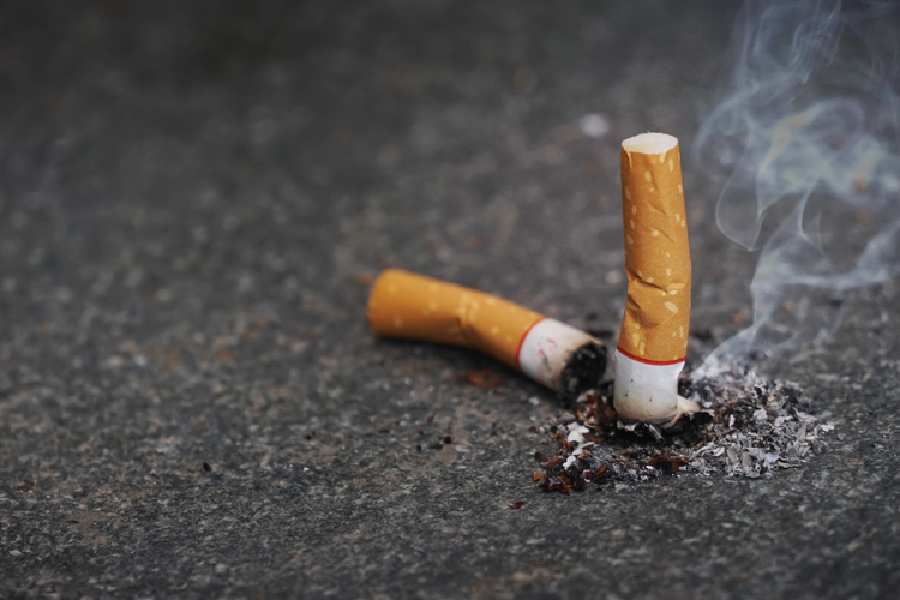
According to a report by telegraphindia, doctors, cancer patients, and hotels are urging the Indian government to ban designated smoking rooms in hotels, restaurants, and airports in order to protect the public from secondhand smoke.


Dr. Harit Chaturvedi, Chair of Cancer Care at Kesar Medical Center, stated: "Smoking exacerbates lung function impairment and lowers immunity. All designated smoking areas in hotels, restaurants, and even airports should be abolished to ensure a completely smoke-free environment. Most designated smoking areas rarely meet the requirements of COTPA, exposing our public to significant health risks due to secondhand smoke inhalation."


According to the 2003 Cigarettes and Other Tobacco Products Act (COTPA), smoking is prohibited in all public places. However, smoking is still allowed in designated smoking areas in some public places such as restaurants, hotels, and airports.


Health activity expert Nalini Satyanarayan stated, "Passive smoking mostly occurs in restaurants, especially in hotels, eateries, bars, clubs, etc. Cigarette smoke can permeate from smoking zones into public areas. The COTPA needs to be amended to prohibit smoking in any location, as this aligns with the best interests of public health."


Currently, the Indian government has initiated the process of amending COTPA and has introduced the 2020 Amendment to the Tobacco Products (Prohibition of Advertisement and Regulation of Trade, Commerce, Production, Supply and Distribution) Act.


We welcome news tips, article submissions, interview requests, or comments on this piece.

Please contact us at info@2firsts.com, or reach out to Alan Zhao, CEO of 2Firsts, on LinkedIn


Notice

1.  This article is intended solely for professional research purposes related to industry, technology, and policy. Any references to brands or products are made purely for objective description and do not constitute any form of endorsement, recommendation, or promotion by 2Firsts.

2.  The use of nicotine-containing products — including, but not limited to, cigarettes, e-cigarettes, nicotine pouchand heated tobacco products — carries significant health risks. Users are responsible for complying with all applicable laws and regulations in their respective jurisdictions.

3.  This article is not intended to serve as the basis for any investment decisions or financial advice. 2Firsts assumes no direct or indirect liability for any inaccuracies or errors in the content.

4.  Access to this article is strictly prohibited for individuals below the legal age in their jurisdiction.


Copyright


This article is either an original work created by 2Firsts or a reproduction from third-party sources with proper attribution. All copyrights and usage rights belong to 2Firsts or the original content provider. Unauthorized reproduction, distribution, or any other form of unauthorized use by any individual or organization is strictly prohibited. Violators will be held legally accountable.

For copyright-related inquiries, please contact: info@2firsts.com


AI Assistance Disclaimer


This article may have been enhanced using AI tools to improve translation and editorial efficiency. However, due to technical limitations, inaccuracies may occur. Readers are encouraged to refer to the cited sources for the most accurate information.

We welcome any corrections or feedback. Please contact us at: info@2firsts.com

The Volume Illusion: Measuring the Future of Nicotine with the Tools of the Past
As next-generation nicotine products become economically central rather than marginal, traditional volume-based metrics are increasingly unable to explain consumption, risk, and value. Units designed for a cigarette-based economy struggle to describe systems defined by delivery speed, pharmacokinetics, and adaptive user behavior. Drawing on financial reporting, regulation, and nicotine science, a fundamental question: can the future of nicotine still be measured using the tools of its past?
Feb.09 by Alan Zhao | 2Firsts Perspectives
Surrey councillor calls for tougher vape sales controls, seeking the “most restrictive legally supportable” package
Surrey Councillor Gordon Hepner presented a notice of motion calling on council to “wage war on vaping” by strengthening controls on the sale of vaping products in the city, citing vaping as a “serious health concern,” especially among youth. Hepner said the motion directs staff to bring back the “most restrictive legally supportable” package from the City’s 2019 bylaw work to materially reduce where and how vape products can be sold, including licensing controls and enforcement.
Feb.10 by 2FIRSTS.ai
FDA Commissioner Stresses “Predictability” as Science Chief Addresses Industry Uncertainty
FDA Commissioner Marty Makary briefly appeared at the February 10 PMTA roundtable, underscoring the importance of regulatory predictability. At the close of the session, Office of Science Director Matthew Farrelly responded to industry concerns over review uncertainty, stating the agency will issue a written summary of feedback, while reiterating that no fixed quantitative risk benchmark governs authorization decisions.
Feb.11
Arizona Moves to Tighten Vape Supply-Chain Enforcement, Targeting Illicit Products
Arizona state Sen. Shawnna Bolick introduced SB 1397 to curb illicit vapes by tracing product origins, intercepting illegal shipments, and cracking down on retailers that violate state law. The proposal would require manufacturers to hold a state license to sell in Arizona, with fines up to $10,000 for unlicensed sales.
Jan.30 by 2FIRSTS.ai
Singapore Health Minister Ong Ye Kung receives SEATCA award for tobacco control and anti-vaping push
SEATCA has honoured Singapore Health Minister Ong Ye Kung with its inaugural Trailblazer Award, citing Singapore’s long-standing vaping ban, stepped-up enforcement and regulatory measures, and the city-state’s role in sharing tobacco-control policy experience across ASEAN.
Feb.06 by 2FIRSTS.ai
Bangkok Police Bust Illegal E-Cigarette Warehouse, Seize Vapes Worth Over $112,000
Thai police raided an illegal e-cigarette warehouse, arrested a man accused of selling vapes online, and seized a large quantity of improperly imported products worth more than 4 million baht (about $112,000).
Dec.25 by 2FIRSTS.ai