JTI Launches "Aprimora Solo" Program in Brazil next Week

JTI by 2FIRSTS.ai
Apr.12.2024
JTI Launches "Aprimora Solo" Program in Brazil next Week
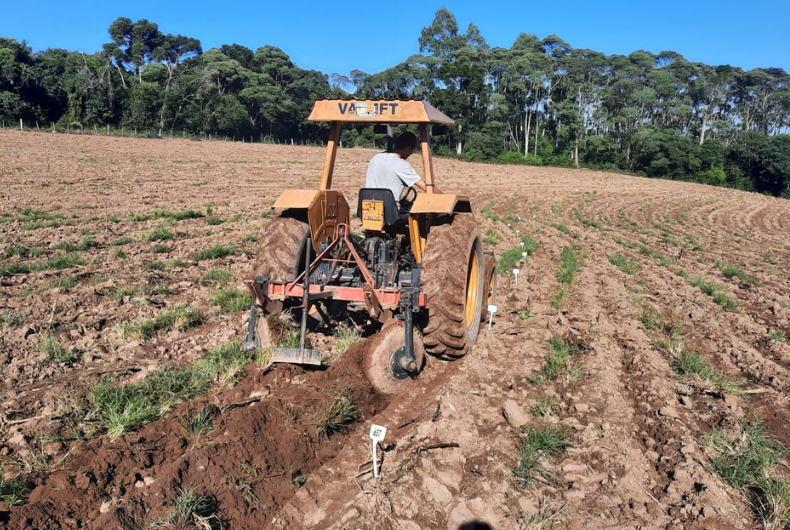
Japan Tobacco International (JTI) to launch "Aprimora Solo" program in Brazil next Monday to improve soil conditions and protect resources.

According to a report by gaz on April 11th, Japan Tobacco International (JTI) plans to launch the "Aprimora Solo" program in Brazil next Monday (April 15th). The program aims to improve farmers' soil conditions and protect agricultural and environmental resources.


Tiago Schuck, the research and development director for JTI, emphasized the importance of the program. The main goal of the "Improve Soil" initiative is to enhance soil quality for integrated producers in order to achieve sustainability and productivity in agricultural environments. All JTI agronomy technicians have received extensive training and are prepared to assess soil conditions, identify necessary improvements, and propose management plans tailored to the realities of each industry and region.


In the 2024 planting season, a total of 1,378 farmers participated in the program, with JTI implementing a total of 4,613 improvements.


We welcome news tips, article submissions, interview requests, or comments on this piece.

Please contact us at info@2firsts.com, or reach out to Alan Zhao, CEO of 2Firsts, on LinkedIn


Notice

1.  This article is intended solely for professional research purposes related to industry, technology, and policy. Any references to brands or products are made purely for objective description and do not constitute any form of endorsement, recommendation, or promotion by 2Firsts.

2.  The use of nicotine-containing products — including, but not limited to, cigarettes, e-cigarettes, nicotine pouchand heated tobacco products — carries significant health risks. Users are responsible for complying with all applicable laws and regulations in their respective jurisdictions.

3.  This article is not intended to serve as the basis for any investment decisions or financial advice. 2Firsts assumes no direct or indirect liability for any inaccuracies or errors in the content.

4.  Access to this article is strictly prohibited for individuals below the legal age in their jurisdiction.


Copyright


This article is either an original work created by 2Firsts or a reproduction from third-party sources with proper attribution. All copyrights and usage rights belong to 2Firsts or the original content provider. Unauthorized reproduction, distribution, or any other form of unauthorized use by any individual or organization is strictly prohibited. Violators will be held legally accountable.

For copyright-related inquiries, please contact: info@2firsts.com


AI Assistance Disclaimer


This article may have been enhanced using AI tools to improve translation and editorial efficiency. However, due to technical limitations, inaccuracies may occur. Readers are encouraged to refer to the cited sources for the most accurate information.

We welcome any corrections or feedback. Please contact us at: info@2firsts.com

York Traders Could Face Fines of Up to GBP 200 Under New Illegal Vape Enforcement Plans
City of York Council is considering new plans that would allow fines of up to GBP 200.00 (approximately USD 260.00) for traders caught selling illegal single-use vapes.
Apr.09 by 2FIRSTS.ai
From myblu to Zone: Imperial Brands Refocuses NGP Strategy in HY26
mperial Brands’ HY26 results point to a more selective NGP transition. The company is using cash flow from traditional tobacco to fund targeted investments in modern oral nicotine, heated tobacco and reusable vaping systems. Its decision to exit the legacy myblu vaping business in the U.S., while expanding Zone nicotine pouches. In Europe, Imperial’s NGP growth is being driven by a multi-category portfolio including blu, Pulze and Zone/Skruf.
Special Report
May.12
Exclusive | TPE 2026 Cools as Caution Deepens in the U.S. Vape Market
The show had become an important check-in point for Chinese manufacturers and brand owners looking for signs of change in the U.S. market after months of softer demand. Instead, participants said the event highlighted a more restrained mood: traffic in the vape section was uneven, standout launches were limited, and conversations often failed to turn into orders.
Special Report
Apr.12
Argentina’s New Nicotine Rules Draw Cautious Optimism and Market Concerns, Local Tobacco Harm Reduction Advocate Says
Argentina’s new tobacco and nicotine framework marks a shift from prohibition toward registration, traceability and health surveillance. Argentine THR advocate Juan Facundo Teme told 2Firsts that adult consumers and parts of the local commercial sector are cautiously optimistic, but concerns remain over flavor limits, registration costs and market access. The policy’s implementation may determine whether Argentina can move informal sales into regulated channels.
May.11
Indonesian drug agency chief proposes ban on e-cigarettes and e-liquid containing harmful substances
Indonesian drug agency chief proposes ban on e-cigarette and e-liquid in new draft law, citing dangerous substances found.
Apr.08 by 2FIRSTS.ai
WHO’s First Global Report on Nicotine Pouches: Harm Reduction Questions Remain Amid Global Regulatory Warning
Ahead of World No Tobacco Day 2026, WHO released its first global report on nicotine pouches, warning that rapid market growth, youth-oriented marketing and weak regulation are converging. 2Firsts views the report as an important warning, but not a complete risk assessment, with harm-reduction questions still unresolved.
Special Report
May.17