Recent Nielsen Data: Vuse and Juul Battle for Market Share

Market by 2FIRSTS.ai
Jan.15.2024
Recent Nielsen Data: Vuse and Juul Battle for Market Share
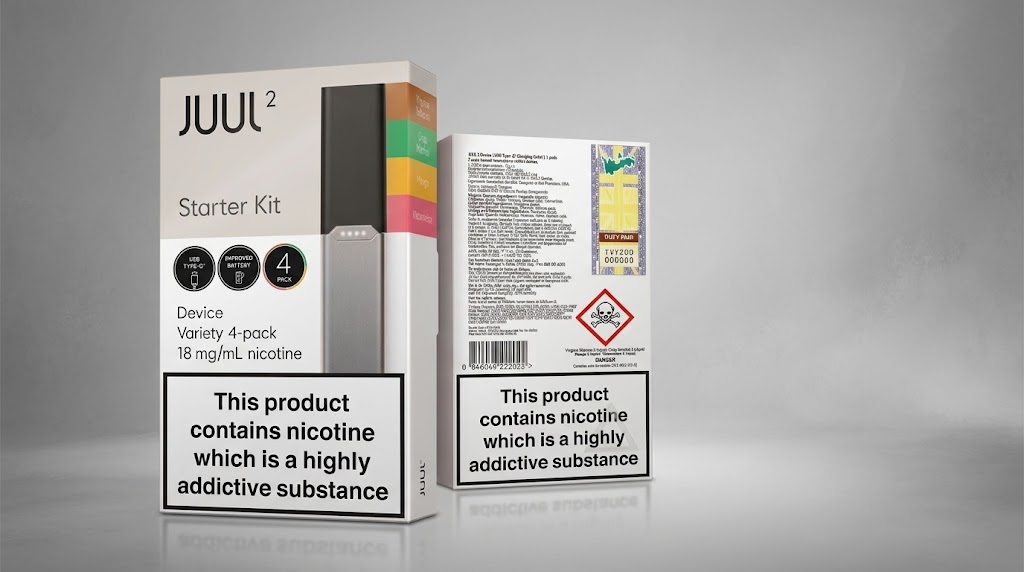
According to Journalnow, Nielsen's latest convenience store data shows Vuse maintaining a 42% market share, while Juul's share dropped to 24.2%.

According to a recent report by American media outlet Journalnow, the latest convenience store data from Nielsen reveals that Vuse, a brand under British-American Tobacco, maintained a market share of 42% in December. In contrast, Juul, ranked second, saw its market share decline from 24.3% to 24.2%. There was no change in the market share of NJoy, which is owned by Altria Group, remaining at 2.6%. Blu, a brand under Imperial Tobacco, also remained unchanged at 1.2%.


It is worth noting that the entire e-cigarette category has experienced a decline of 9.9%.


The Nielsen report primarily focuses on major chain stores, R.J. Reynolds Vapor Co., and Altria Group, who are pushing for the US Food and Drug Administration (FDA) to strengthen enforcement measures against "illegal" nicotine e-cigarettes in the American market.


Both companies estimate that these illicit products make up approximately half of the share in the US e-cigarette market.


We welcome news tips, article submissions, interview requests, or comments on this piece.

Please contact us at info@2firsts.com, or reach out to Alan Zhao, CEO of 2Firsts, on LinkedIn


Notice

1.  This article is intended solely for professional research purposes related to industry, technology, and policy. Any references to brands or products are made purely for objective description and do not constitute any form of endorsement, recommendation, or promotion by 2Firsts.

2.  The use of nicotine-containing products — including, but not limited to, cigarettes, e-cigarettes, nicotine pouchand heated tobacco products — carries significant health risks. Users are responsible for complying with all applicable laws and regulations in their respective jurisdictions.

3.  This article is not intended to serve as the basis for any investment decisions or financial advice. 2Firsts assumes no direct or indirect liability for any inaccuracies or errors in the content.

4.  Access to this article is strictly prohibited for individuals below the legal age in their jurisdiction.


Copyright


This article is either an original work created by 2Firsts or a reproduction from third-party sources with proper attribution. All copyrights and usage rights belong to 2Firsts or the original content provider. Unauthorized reproduction, distribution, or any other form of unauthorized use by any individual or organization is strictly prohibited. Violators will be held legally accountable.

For copyright-related inquiries, please contact: info@2firsts.com


AI Assistance Disclaimer


This article may have been enhanced using AI tools to improve translation and editorial efficiency. However, due to technical limitations, inaccuracies may occur. Readers are encouraged to refer to the cited sources for the most accurate information.

We welcome any corrections or feedback. Please contact us at: info@2firsts.com

Korean Vape Retailers Warn of Possible Store Closures After New Tobacco Rules Take Effect
South Korea’s revised Tobacco Business Act will take effect on April 24, bringing synthetic nicotine liquid vapes into the legal definition of tobacco and subjecting both retailers and manufacturers to formal regulation.
Apr.13 by 2FIRSTS.ai
Brazilian Research Institutions Prepare Joint Recommendations on Electronic Smoking Device Studies
Brazil’s National Cancer Institute, the Oswaldo Cruz Foundation, and other research institutions are preparing a joint letter with recommendations and guidance for studies on electronic smoking devices, including e-cigarettes, vapes, and similar products. The guidelines were discussed on April 14 and 15 at the seminar “Building a Priority Research Agenda on Electronic Smoking Devices for Brazil” in Rio de Janeiro.
Apr.16 by 2FIRSTS.ai
IMF Article Sets Out Three Principles: Cover All Harmful Products, Match Tax Rates to Harm, Improve Cross-Border Coordination
A March 2026 article in Finance & Development, “Taxing Harmful Habits,” argues that taxes on harmful products such as tobacco, alcohol and sugary drinks should better reflect the health harm they cause. The authors propose three principles: capture all harmful products, align tax rates with health harm, and strengthen cross-border coordination to reduce evasion and smuggling.
Mar.24 by 2FIRSTS.ai
Australia’s Tasmania Tables New Bill to Strengthen Crackdown on Illicit Tobacco and Vapes
The Tasmanian government has tabled the Public Health Amendment (Prohibited Tobacco and Other Products) Bill 2026 in Parliament, proposing new offences, higher penalties and stronger enforcement powers to crack down on illicit tobacco and vaping products.
Mar.25 by 2FIRSTS.ai
FDA nicotine pouch review delay report knocks tobacco shares lower
After Reuters reported before the market open that FDA reviews of nicotine pouch applications could face delays, shares of Philip Morris International, Turning Point Brands and British American Tobacco fell on April 1, underscoring the direct impact of U.S. regulatory signals on major tobacco companies and nicotine pouch expectations.
Apr.02
Exclusive | TPE 2026 Cools as Caution Deepens in the U.S. Vape Market
The show had become an important check-in point for Chinese manufacturers and brand owners looking for signs of change in the U.S. market after months of softer demand. Instead, participants said the event highlighted a more restrained mood: traffic in the vape section was uneven, standout launches were limited, and conversations often failed to turn into orders.
Special Report
Apr.12