Seizure of 5.6 Ton E-cigarettes Worth over $800,000 at Guarulhos Airport

Regulations by 2FIRSTS.ai
Dec.24.2024
Seizure of 5.6 Ton E-cigarettes Worth over $800,000 at Guarulhos Airport
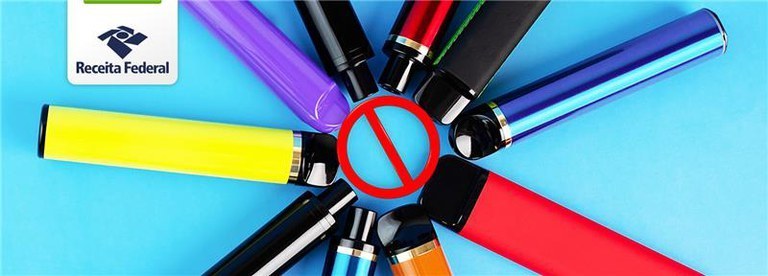
Brazilian Federal Revenue announced the seizure of 5.6 tons of e-cigarettes worth over $800,000 at Guarulhos International Airport.

Recently, the Brazilian Federal Revenue Office (Receita Federal) issued a statement announcing that authorities discovered a shipment of 5.6 tons of e-cigarettes in the cargo warehouse at Guarulhos International Airport. A total of 43,200 devices were seized, with a market value that could exceed 5 million Brazilian reais (800,000 US dollars).


These goods were identified and detained during the transfer process in order to issue formal documentation of their violation.


This operation was carried out by the Customs Risk Management Service (Serad) of the Federal Tax and Customs Administration of Guarulhos. During the risk analysis process, enforcement officers found inconsistencies in the documents of the shipment. After further inspection, it was confirmed that the product was in violation and subsequently seized.


Since 2009, the importation, sale, and advertising of e-cigarettes have been prohibited in Brazil by the National Health Surveillance Agency (Anvisa).


We welcome news tips, article submissions, interview requests, or comments on this piece.

Please contact us at info@2firsts.com, or reach out to Alan Zhao, CEO of 2Firsts, on LinkedIn


Notice

1.  This article is intended solely for professional research purposes related to industry, technology, and policy. Any references to brands or products are made purely for objective description and do not constitute any form of endorsement, recommendation, or promotion by 2Firsts.

2.  The use of nicotine-containing products — including, but not limited to, cigarettes, e-cigarettes, nicotine pouchand heated tobacco products — carries significant health risks. Users are responsible for complying with all applicable laws and regulations in their respective jurisdictions.

3.  This article is not intended to serve as the basis for any investment decisions or financial advice. 2Firsts assumes no direct or indirect liability for any inaccuracies or errors in the content.

4.  Access to this article is strictly prohibited for individuals below the legal age in their jurisdiction.


Copyright


This article is either an original work created by 2Firsts or a reproduction from third-party sources with proper attribution. All copyrights and usage rights belong to 2Firsts or the original content provider. Unauthorized reproduction, distribution, or any other form of unauthorized use by any individual or organization is strictly prohibited. Violators will be held legally accountable.

For copyright-related inquiries, please contact: info@2firsts.com


AI Assistance Disclaimer


This article may have been enhanced using AI tools to improve translation and editorial efficiency. However, due to technical limitations, inaccuracies may occur. Readers are encouraged to refer to the cited sources for the most accurate information.

We welcome any corrections or feedback. Please contact us at: info@2firsts.com

Imperial Brands names John Rishton chair-designate, to take over as chair in December 2026
Imperial Brands said in a statement on its website that John Rishton will join the board in July 2026 and assume the role of chair in December, succeeding current chair Thérèse Esperdy, who will retire at that time.
Jan.21 by 2FIRSTS.ai
Korea’s MFDS sets 2026 plan to manage and disclose harmful constituents in tobacco products
South Korea’s Ministry of Food and Drug Safety (MFDS) said it has established its 2026 work plan to systematically manage harmful constituents in tobacco products and disclose related information under the Tobacco Harmfulness Management Act, which took effect in November 2025.
Jan.16 by 2FIRSTS.ai
FDA Highlights Product Characterization as a Foundational Requirement in ENDS PMTA Reviews
During its ongoing PMTA roundtable, FDA emphasized that product characterization is a foundational element in the review of electronic nicotine delivery systems (ENDS). The agency underscored the need for complete product identifying information, validation and verification of test methods on the specific product type, and the appropriate use of tobacco product master files (TPMFs) to support complex or proprietary ingredients in PMTA submissions.
Feb.10
Morocco rolls out compulsory rules for e-cigarettes, muassel and nicotine pouches
Starting February 2026, Morocco will apply its first mandatory standard governing “smoke-free” products—covering e-cigarettes, muassel and nicotine pouches. Drafted by IMANOR, the standard introduces detailed requirements on composition, labelling, traceability and safety, and will apply to imported products. Consumer advocates say clear labelling and traceability are essential, while urging stronger public-awareness efforts and resources.
Feb.03 by 2FIRSTS.ai
Around 58,000 counterfeit vapes and tobacco seized from UK 's Hampshire streets over the past year
UK's Hampshire Trading Standards says around 58,000 counterfeit vapes and tobacco products have been seized from Hampshire over the last year. Richard Strawson, Hampshire’s Head of Trading Standards, said officers often find vape products disguised under fake branding.
Jan.05 by 2FIRSTS.ai
The Volume Illusion: Measuring the Future of Nicotine with the Tools of the Past
As next-generation nicotine products become economically central rather than marginal, traditional volume-based metrics are increasingly unable to explain consumption, risk, and value. Units designed for a cigarette-based economy struggle to describe systems defined by delivery speed, pharmacokinetics, and adaptive user behavior. Drawing on financial reporting, regulation, and nicotine science, a fundamental question: can the future of nicotine still be measured using the tools of its past?
Feb.09 by Alan Zhao | 2Firsts Perspectives