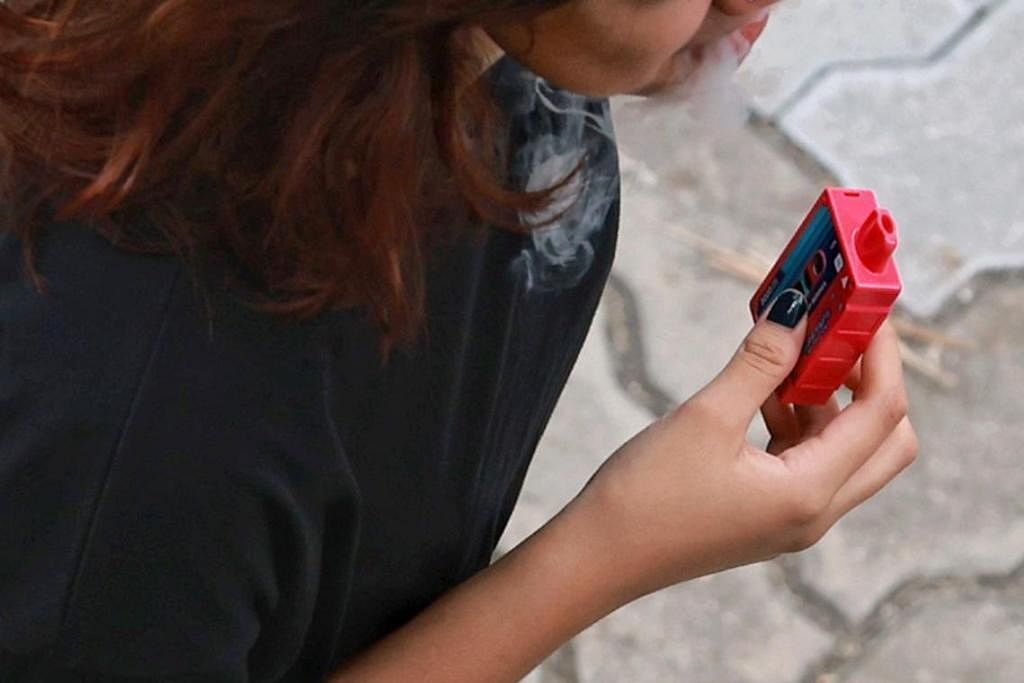
A total of 3,840 people were arrested and fined for possessing or using e-cigarettes in Singapore between 1 July and 30 September, according to Berita Harian on 23 October. This figure represents a 52% increase from the previous quarter.
There were a total of 743 cases of students using e-cigarettes, including those referred by schools and tertiary institutions, according to a joint statement from the Ministry of Health (MOH) and the Health Sciences Authority (HSA). Of these cases, 591 were detected during community enforcement patrols, 44 were detected during enforcement activities around tertiary institutions and 16 were detected at checkpoints.
The Health Sciences Authority (HSA) monitored online content to identify people using e-cigarettes in public places or holding e-cigarettes in photos or videos. In July and August 2024, the HSA issued fines to five people caught using e-cigarettes in this way, and deleted related videos and photos on Instagram and TikTok.
From 1 July to 30 September 2024, the Health Sciences Authority (HSA) and the Immigration and Checkpoints Authority (ICA) conducted multiple operations at air, land and sea checkpoints. Approximately 4,000 visitors were screened and 16 people were arrested for carrying e-cigarettes.
The Ministry of Health (MOH) and the Health Sciences Authority (HSA) have stated that transporters and drivers caught bringing prohibited tobacco products into Singapore will face enforcement action. Foreign nationals found guilty of this offence will be deported and banned from re-entering the country.
We welcome news tips, article submissions, interview requests, or comments on this piece.
Please contact us at info@2firsts.com, or reach out to Alan Zhao, CEO of 2Firsts, on LinkedIn
Notice
1. This article is intended solely for professional research purposes related to industry, technology, and policy. Any references to brands or products are made purely for objective description and do not constitute any form of endorsement, recommendation, or promotion by 2Firsts.
2. The use of nicotine-containing products — including, but not limited to, cigarettes, e-cigarettes, nicotine pouchand heated tobacco products — carries significant health risks. Users are responsible for complying with all applicable laws and regulations in their respective jurisdictions.
3. This article is not intended to serve as the basis for any investment decisions or financial advice. 2Firsts assumes no direct or indirect liability for any inaccuracies or errors in the content.
4. Access to this article is strictly prohibited for individuals below the legal age in their jurisdiction.
Copyright
This article is either an original work created by 2Firsts or a reproduction from third-party sources with proper attribution. All copyrights and usage rights belong to 2Firsts or the original content provider. Unauthorized reproduction, distribution, or any other form of unauthorized use by any individual or organization is strictly prohibited. Violators will be held legally accountable.
For copyright-related inquiries, please contact: info@2firsts.com
AI Assistance Disclaimer
This article may have been enhanced using AI tools to improve translation and editorial efficiency. However, due to technical limitations, inaccuracies may occur. Readers are encouraged to refer to the cited sources for the most accurate information.
We welcome any corrections or feedback. Please contact us at: info@2firsts.com