Switzerland to implement New Tobacco Control Law from October

Regulations by 2FIRSTS.ai
Aug.29.2024
Switzerland to implement New Tobacco Control Law from October
Switzerland to implement new tobacco law banning sales to under 18s and tightening advertising restrictions, effective October 1st.

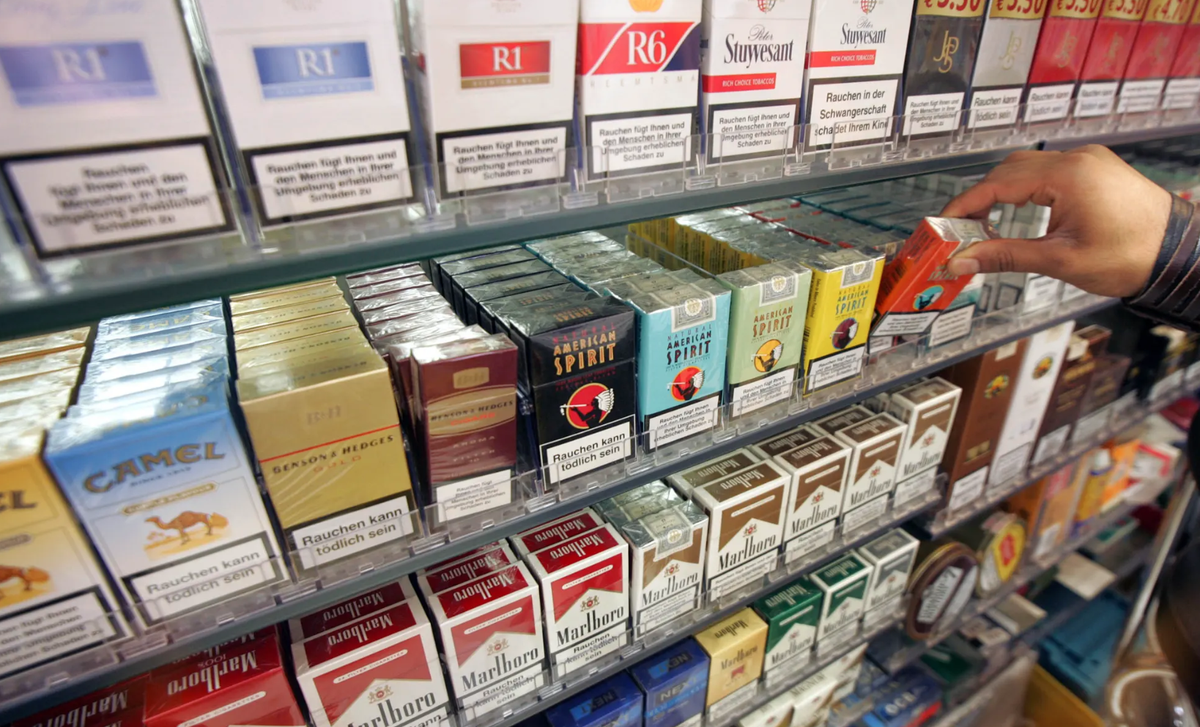
According to Berner Zeitung's report on August 28, the Swiss Federal Council announced that starting from October 1, Switzerland will implement a new Tobacco Products Act, prohibiting anyone under the age of 18 from purchasing any tobacco products and e-cigarettes.


The new regulations aim to further control the use of tobacco products and e-cigarettes through strict sales, advertising, and reporting requirements.


The new measures include:


A nationwide ban on the sale of tobacco products to minors has been implemented, along with strengthened advertising restrictions. For example, advertising related to tobacco products is prohibited on posters, public transportation, cinemas, and public places such as train stations, airports, and sports stadiums. All currently smoke-free areas will expand their restrictions to include heated tobacco products and e-cigarettes. Sponsorship of events targeting international audiences or minors is prohibited, and new picture warning signs will be added to tobacco packaging.


At present, Parliament is considering the Tobacco Products Act to strengthen control over tobacco products.


We welcome news tips, article submissions, interview requests, or comments on this piece.

Please contact us at info@2firsts.com, or reach out to Alan Zhao, CEO of 2Firsts, on LinkedIn


Notice

1.  This article is intended solely for professional research purposes related to industry, technology, and policy. Any references to brands or products are made purely for objective description and do not constitute any form of endorsement, recommendation, or promotion by 2Firsts.

2.  The use of nicotine-containing products — including, but not limited to, cigarettes, e-cigarettes, nicotine pouchand heated tobacco products — carries significant health risks. Users are responsible for complying with all applicable laws and regulations in their respective jurisdictions.

3.  This article is not intended to serve as the basis for any investment decisions or financial advice. 2Firsts assumes no direct or indirect liability for any inaccuracies or errors in the content.

4.  Access to this article is strictly prohibited for individuals below the legal age in their jurisdiction.


Copyright


This article is either an original work created by 2Firsts or a reproduction from third-party sources with proper attribution. All copyrights and usage rights belong to 2Firsts or the original content provider. Unauthorized reproduction, distribution, or any other form of unauthorized use by any individual or organization is strictly prohibited. Violators will be held legally accountable.

For copyright-related inquiries, please contact: info@2firsts.com


AI Assistance Disclaimer


This article may have been enhanced using AI tools to improve translation and editorial efficiency. However, due to technical limitations, inaccuracies may occur. Readers are encouraged to refer to the cited sources for the most accurate information.

We welcome any corrections or feedback. Please contact us at: info@2firsts.com

New Zealand Survey Finds Adult Daily Vaping Prevalence at 11.7%, Concentrated Among Youth and Disadvantaged Groups)
A survey report released by the Public Health Communication Centre Aotearoa shows that despite New Zealand implementing stricter vaping regulations in 2025, including a ban on disposable products and tighter flavour restrictions, daily vaping rates continue to rise. The research body urges close monitoring of behavioural changes following the new rules coming into force.
Dec.05 by 2FIRSTS.ai
Pakistan Speeds Up Local Nicotine Pouch Production as PMI Unit Prepares to Launch ZYN
Pakistan’s smokeless, tobacco-free nicotine pouch market has expanded rapidly in recent years, prompting major tobacco companies to accelerate local investments, with Philip Morris Pakistan Ltd. (PMPKL) set to produce ZYN at its Sahiwal facility.
Dec.05 by 2FIRSTS.ai
Ispire and IKE Tech Welcome FDA Enforcement Boost, Highlight Need for Tech-Based Controls
Ispire Technology and IKE Tech issued statements after the U.S. FDA received Congressional funding and directives to strengthen enforcement against illicit vaping products. The companies emphasized updated guidance, multi-agency coordination and the role of blockchain and age-verification technologies in preventing illegal imports and protecting youth.
Nov.20
China’s E-Cigarette Exports Reached USD 879 Million in September 2025, Down 6.08% MoM— U.S. Remains Top Market, Russia Falls Sharply
In September 2025, China’s total e-cigarette exports reached USD 879 million, representing a 6.08% decline month-on-month but a 3.41% increase year-on-year.
Oct.20 by 2FIRSTS.ai
Feature | Vape Politics in Russia: Local Governments Push Forward Despite Legislative Deadlock
As Russia’s federal vape policy stalls, regional governors are racing to implement local bans—now with the backing of President Vladimir Putin. The divide between swift local action and delayed national legislation is fueling debate over health, regulation, and the country’s broader approach to nicotine control.
Oct.28
Smoore and EVE Energy Sign Procurement Framework Agreement Covering 2026–2028 Cell Supply
Smoore and EVE Energy have signed a procurement framework agreement for 2026–2028, under which Smoore Group will continue purchasing battery cells and related products. The agreement sets no specific transaction amount; actual figures will be determined by future orders, reflecting both parties’ intention to secure and extend their supply chain cooperation over the next three years.
Nov.21