Bashkortostan to Impose Fines for Public E-Cigarette Use

Sep.09.2024
Bashkortostan to Impose Fines for Public E-Cigarette Use
Bashkortostan to fine public e-cigarette use, expanding ban to include all nicotine products, including hookahs.

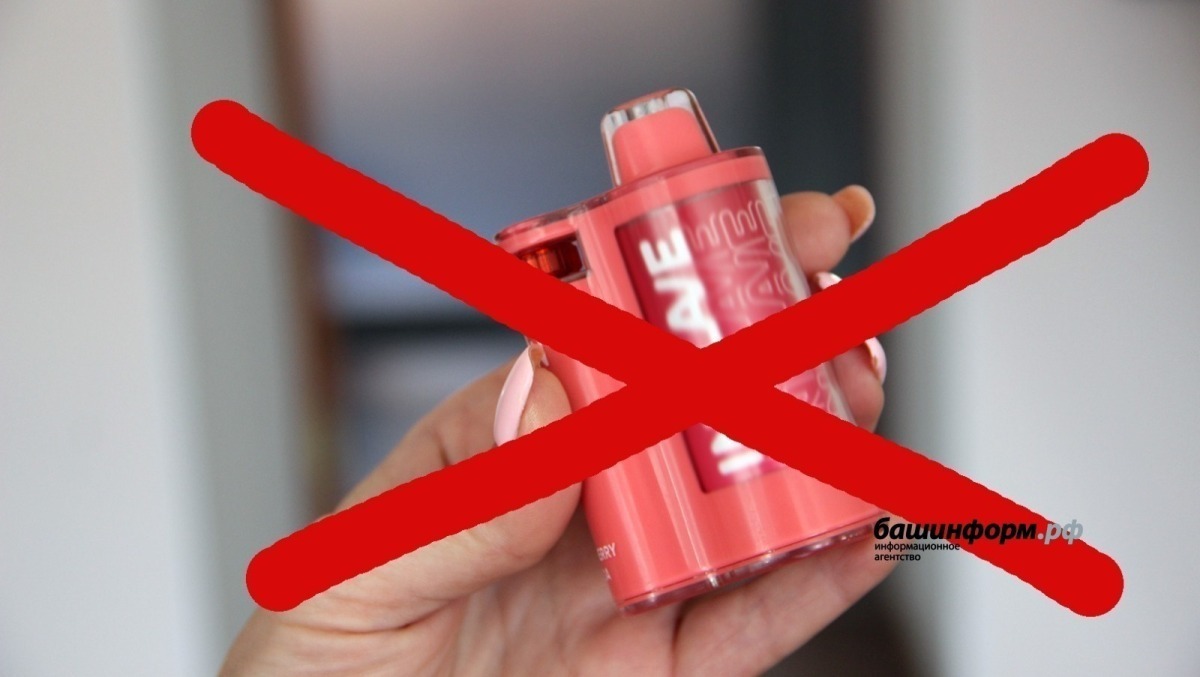
Two Breaking News Alerts: According to Bashinform on September 9th, the Russian Republic of Bashkortostan is set to impose fines for using e-cigarettes and other similar products in public places. The relevant amendments are expected to be officially included in the Republic's Administrative Offences Code in September.


The Speaker of the Bashkortostan Council, Konstantin Tolkachyov, emphasized that this measure should be extended to all products containing nicotine, including hookah.


Federal and Republic laws list public places where smoking is prohibited, including schools, hospitals, sanatoriums, trains, planes, parks and squares, public transportation stations, underground and aboveground pedestrian walkways, and public event venues. For smokers, the first offense carries a fine of 500 rubles ($5.50), while repeat offenses result in a fine of 1000 rubles ($11). Considering the increasing popularity of various e-cigarettes and electronic heating devices, we believe that this measure should also cover all products containing nicotine and hookahs.


In addition, the Bashkortostan region has explicitly banned smoking or using nicotine products and hookahs in schools, hospitals, sanatoriums, as well as on trains, ships, airplanes, all types of public transportation, and hotels.


We welcome news tips, article submissions, interview requests, or comments on this piece.

Please contact us at info@2firsts.com, or reach out to Alan Zhao, CEO of 2Firsts, on LinkedIn


Notice

1.  This article is intended solely for professional research purposes related to industry, technology, and policy. Any references to brands or products are made purely for objective description and do not constitute any form of endorsement, recommendation, or promotion by 2Firsts.

2.  The use of nicotine-containing products — including, but not limited to, cigarettes, e-cigarettes, nicotine pouchand heated tobacco products — carries significant health risks. Users are responsible for complying with all applicable laws and regulations in their respective jurisdictions.

3.  This article is not intended to serve as the basis for any investment decisions or financial advice. 2Firsts assumes no direct or indirect liability for any inaccuracies or errors in the content.

4.  Access to this article is strictly prohibited for individuals below the legal age in their jurisdiction.


Copyright


This article is either an original work created by 2Firsts or a reproduction from third-party sources with proper attribution. All copyrights and usage rights belong to 2Firsts or the original content provider. Unauthorized reproduction, distribution, or any other form of unauthorized use by any individual or organization is strictly prohibited. Violators will be held legally accountable.

For copyright-related inquiries, please contact: info@2firsts.com


AI Assistance Disclaimer


This article may have been enhanced using AI tools to improve translation and editorial efficiency. However, due to technical limitations, inaccuracies may occur. Readers are encouraged to refer to the cited sources for the most accurate information.

We welcome any corrections or feedback. Please contact us at: info@2firsts.com

Rethinking Nicotine Harm Reduction: A Neuroscientist’s Perspective on Scientific Gaps and Future Directions — By Dr. Xin-an Liu
After France’s ANSES report on nicotine products and harm reduction, Dr. Xin-an Liu wrote to 2Firsts reassessing the field’s foundations. She argues the debate reveals gaps in evidence on long-term behavioral substitution, addiction pathways and neurobiological impacts, and calls for longitudinal research, integrated behavioral science and neuroimaging, clearer risk assessment and stronger transparency to ensure policy and next-generation product development rest on solid evidence.
Industry Insight
Feb.24
FDA Commissioner Stresses “Predictability” as Science Chief Addresses Industry Uncertainty
FDA Commissioner Marty Makary briefly appeared at the February 10 PMTA roundtable, underscoring the importance of regulatory predictability. At the close of the session, Office of Science Director Matthew Farrelly responded to industry concerns over review uncertainty, stating the agency will issue a written summary of feedback, while reiterating that no fixed quantitative risk benchmark governs authorization decisions.
Feb.11
China Tobacco Annual Meeting Flags “New Growth Drivers” for 2026: Cigarette Innovation, Domestic Cigars, Overseas Business and Multi-Purpose Use
China’s tobacco authorities used their annual industry meeting in Beijing to outline new growth drivers for 2026, highlighting cigarette innovation, domestic cigars, overseas business expansion and multi-purpose tobacco applications.
Special Report
Jan.20
Alabama SB9 advances: Senate committee clears bill to treat vaping like smoking in enclosed public places
Alabama’s Senate Bill 9 advanced after clearing the Senate Committee on Healthcare, moving to the full Alabama Senate for consideration. The proposal would update the state’s 2003 Clean Indoor Air Act by including e-cigarettes and other vaping devices under the same restrictions that apply to smoking in most enclosed public places.
Jan.22 by 2FIRSTS.ai
New Nicotine Products Added to Tax List in Delaware Budget Proposal
Delaware Governor Matt Meyer’s proposed FY2027 budget would significantly raise cigarette and nicotine product taxes to help close a $500 million budget gap and generate new revenue. The cigarette tax would rise from $2.10 to $3.60 per pack, with increases on moist snuff, e-liquids and other tobacco products. Supporters say the move is justified, while small businesses warn of potential sales losses.
Feb.17
UK reminds vaping firms to apply for new excise duty registration from April 2026
HMRC has issued a reminder urging vaping manufacturers, importers and warehouse operators to prepare for registration under the UK’s new Vaping Products Duty, with applications opening in April 2026 and the duty taking effect in October.
Feb.10