New Restrictions on Sale and Use of E-Cigarettes in Bacolod City

Oct.26.2023
New Restrictions on Sale and Use of E-Cigarettes in Bacolod City
Boracay City in the Philippines has updated its smoking ban to include restrictions on the sale and use of e-cigarettes.

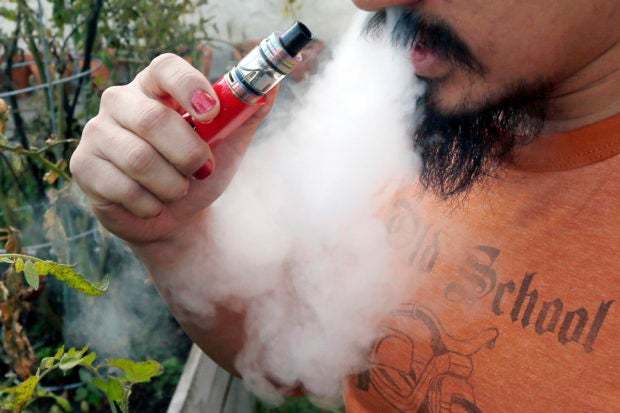
According to the report by Inquirer, the city of Badong in the Philippines has introduced amendments to the smoking ban ordinance passed in 2012, now placing restrictions on the sale and use of e-cigarettes and e-cigarette liquid products.


The Municipal Public Information Office has announced that the amendment to City Regulation No. 1 in 2012 includes the prohibition of selling and using e-cigarette products in schools, areas near schools, children's entertainment facilities, elevator stairwells, gas stations, hospitals, buses, stations, food preparation areas, public places such as squares, parks and playgrounds, municipal halls, cinemas, and churches.


The PIO further added that the sale of e-cigarette products to minors is strictly prohibited. The revised regulations also mandate the establishment of designated smoking or e-cigarette areas that must be approved by the local Public Health Office (CHO).


The city of Badong will establish a smoke-free task force to oversee enforcement of the regulations. Offenders will face a fine of 1,000 pesos for the first violation, 2,000 pesos for the second violation, and 3,000 pesos plus imprisonment for the third violation. Individuals caught selling e-cigarettes in violation of the regulations will be subject to a fine of 3,000 pesos for the first offense, 4,000 pesos for the second offense, 5,000 pesos for the third offense, as well as imprisonment, and suspension or revocation of their licenses or business permits.


We welcome news tips, article submissions, interview requests, or comments on this piece.

Please contact us at info@2firsts.com, or reach out to Alan Zhao, CEO of 2Firsts, on LinkedIn


Notice

1.  This article is intended solely for professional research purposes related to industry, technology, and policy. Any references to brands or products are made purely for objective description and do not constitute any form of endorsement, recommendation, or promotion by 2Firsts.

2.  The use of nicotine-containing products — including, but not limited to, cigarettes, e-cigarettes, nicotine pouchand heated tobacco products — carries significant health risks. Users are responsible for complying with all applicable laws and regulations in their respective jurisdictions.

3.  This article is not intended to serve as the basis for any investment decisions or financial advice. 2Firsts assumes no direct or indirect liability for any inaccuracies or errors in the content.

4.  Access to this article is strictly prohibited for individuals below the legal age in their jurisdiction.


Copyright


This article is either an original work created by 2Firsts or a reproduction from third-party sources with proper attribution. All copyrights and usage rights belong to 2Firsts or the original content provider. Unauthorized reproduction, distribution, or any other form of unauthorized use by any individual or organization is strictly prohibited. Violators will be held legally accountable.

For copyright-related inquiries, please contact: info@2firsts.com


AI Assistance Disclaimer


This article may have been enhanced using AI tools to improve translation and editorial efficiency. However, due to technical limitations, inaccuracies may occur. Readers are encouraged to refer to the cited sources for the most accurate information.

We welcome any corrections or feedback. Please contact us at: info@2firsts.com

Alan Zhao: In the Post-“Absolute Resolve” Era: Speculating on U.S.-Referenced Regulatory Alignment and the Restructuring of Order in South America’s Novel Tobacco Market
Alan Zhao analyzes post-Operation Absolute Resolve geopolitics and the rise of “U.S.-referenced regulatory alignment” in South America’s novel tobacco market as U.S. influence grows. Using regulatory reliance, digitalized enforcement, and industrial shifts, he assesses how rule redesign may alter market access, competition, and supply chains, asking how firms can find durable certainty as order is rewritten.
Jan.06 by 2Firsts Perspectives
Mexico’s ENCODAT 2025 finds smoking rate falls as vaping rises
Results from Mexico’s ENCODAT 2025 indicate a structural shift in tobacco and nicotine use: past-month combustible tobacco use among the general population (ages 12–65) declined to 15.1%, down from 17.6% in 2016, while past-month e-cigarette use increased to 2.6%, up from 1.1%.
Dec.25 by 2FIRSTS.ai
2Firsts Outlines 2025 Global Product Trends in the New Tobacco Industry
As regulation tightens and innovation matures, competition in the new tobacco industry is shifting. In its 2025 Global Product Trends in the New Tobacco Industry report, 2Firsts examines how heated tobacco, nicotine pouches, and vape products are moving beyond feature-driven upgrades toward system-level design, where experience management, compliance structure, and engineering capability increasingly shape long-term competition.
Jan.12 by 2Firsts Perspectives
Philippine DOH Calls for Nationwide Vape Ban Amid Surging Youth Use
The Philippine Department of Health (DOH) has warned that youth vaping has reached alarming levels. Health Secretary Ted Herbosa stressed that despite regulations limiting vaping to adults aged 18 and above, minors—many in school uniforms—are frequently seen using vape devices. Criticizing the industry’s youth-targeted marketing tactics, Herbosa said the government should consider a nationwide total ban on vape products.
Nov.24 by 2FIRSTS.ai
South Korea’s National Assembly Passes Law Classifying E-Cigarettes as Tobacco Products with Full Equivalent Regulation
South Korea’s National Assembly recently passed a comprehensive package of 79 bills that, among other measures, formally classifies liquid vapes — e-cigarette products using nicotine-containing e-liquids — as tobacco products. These products will now be subject to the same taxation, sales restrictions and advertising controls as traditional cigarettes, and the vaping industry in South Korea is expected to face significant adjustments in compliance costs, market access and business strategy.
Dec.03
Exclusive: Altria Confirms FDA Grants Marketing Authorization to on! PLUS, Ending More Than a Year of PMTA Review
Altria on December 19 confirmed that six on! PLUS nicotine pouch products had received U.S. FDA marketing authorization, ending a PMTA review lasting more than a year after the company moved ahead with launch plans before clearance.
Regulations
Dec.20