Thai Police Bust Illegal E-cigarette Sales to Minors at Market

Regulations by 2FIRSTS.ai
Mar.13.2024
Thai Police Bust Illegal E-cigarette Sales to Minors at Market
Thai police seize over 378 e-cigarettes in a market raid after receiving complaints of illegal sales to minors.

According to newsdirectory3 on March 12th, Thai police received a complaint from the public while conducting an inspection at a market in Nakhon Phanom Province, alleging that someone was illegally operating an e-cigarette shop and selling e-cigarettes to minors.


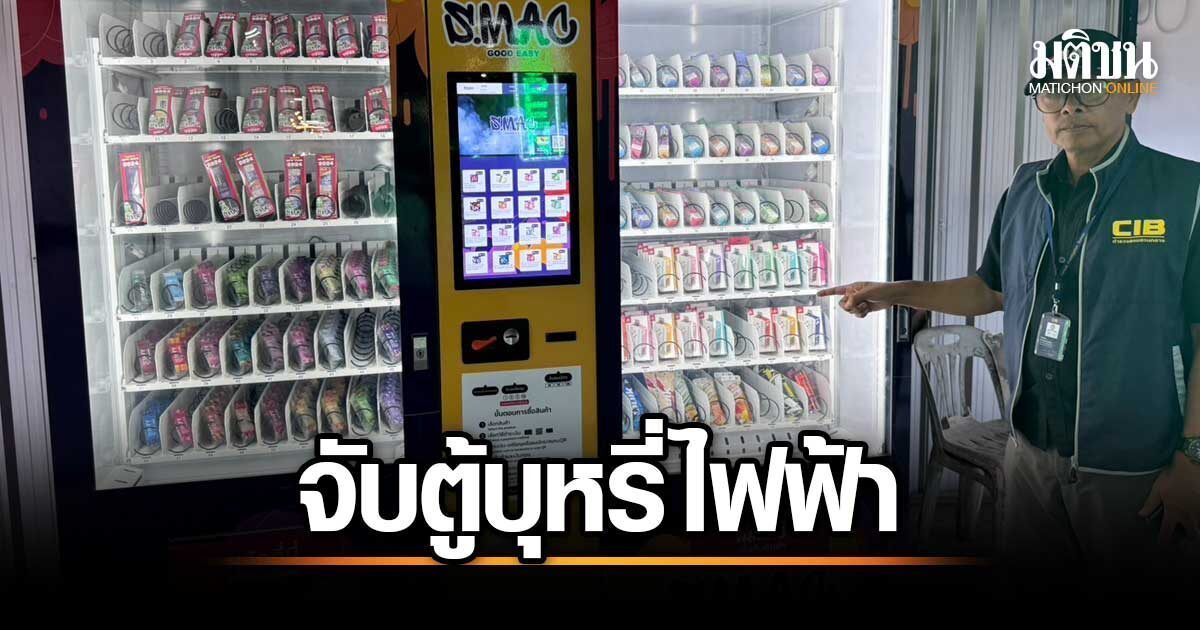
Upon inspection, it was determined that this is an e-cigarette vending machine, which operates through an ordering system on the machine's screen. It functions like a typical vending machine, but it dispenses e-cigarettes. Police have seized the vending machine and various types of e-cigarettes, totaling over 378 items, with a combined value of over 58,000 Thai Baht (approximately $16,807.6 USD).


Subsequently, the police located the individuals involved in the case and will be taking further legal action.


We welcome news tips, article submissions, interview requests, or comments on this piece.

Please contact us at info@2firsts.com, or reach out to Alan Zhao, CEO of 2Firsts, on LinkedIn


Notice

1.  This article is intended solely for professional research purposes related to industry, technology, and policy. Any references to brands or products are made purely for objective description and do not constitute any form of endorsement, recommendation, or promotion by 2Firsts.

2.  The use of nicotine-containing products — including, but not limited to, cigarettes, e-cigarettes, nicotine pouchand heated tobacco products — carries significant health risks. Users are responsible for complying with all applicable laws and regulations in their respective jurisdictions.

3.  This article is not intended to serve as the basis for any investment decisions or financial advice. 2Firsts assumes no direct or indirect liability for any inaccuracies or errors in the content.

4.  Access to this article is strictly prohibited for individuals below the legal age in their jurisdiction.


Copyright


This article is either an original work created by 2Firsts or a reproduction from third-party sources with proper attribution. All copyrights and usage rights belong to 2Firsts or the original content provider. Unauthorized reproduction, distribution, or any other form of unauthorized use by any individual or organization is strictly prohibited. Violators will be held legally accountable.

For copyright-related inquiries, please contact: info@2firsts.com


AI Assistance Disclaimer


This article may have been enhanced using AI tools to improve translation and editorial efficiency. However, due to technical limitations, inaccuracies may occur. Readers are encouraged to refer to the cited sources for the most accurate information.

We welcome any corrections or feedback. Please contact us at: info@2firsts.com

2Firsts Interview | InterTabac 2026 Adapts to a More Complex Tobacco and Nicotine Market
As InterTabac 2026 approaches, Sabine Loos, Managing Director of Westfalenhallen Unternehmensgruppe, tells 2Firsts that global tobacco trade fairs are evolving beyond product display. With new nicotine categories, shifting regulation and more complex supply chains reshaping the industry, InterTabac is positioning itself as a platform for market insight, regulatory discussion and global business connection.
Special Report
Jul.02
Tobacco Farming in the New Nicotine Era: Why Indian Farmers Struggle to Transition — Contributed by Samrat Chowdhery
In this contributed article to 2Firsts, Mumbai-based journalist and harm reduction advocate Samrat Chowdhery examines India’s tobacco transition from the perspective of agriculture, supply chains and regulation. As noted by 2Firsts, India offers a relevant case for understanding how new nicotine technologies may affect not only consumption, trade and policy, but also tobacco farming.
Special Report
May.29
2Firsts Hosts U.S. Compliance Briefing on Building PMTA Support Capabilities Across the Nicotine Supply Chain
2Firsts held a U.S. compliance briefing in Shenzhen to help vaping, heated tobacco and nicotine pouch supply chain companies strengthen PMTA support capabilities. The event focused on supplier documentation, quality systems, traceability, TPMF/TPMP pathways, age verification and customer audit readiness as U.S. compliance expectations increasingly extend deeper into the nicotine supply chain.
Events
Jun.12
PMI’s ZYN Launches Loyalty Platform in Mexico, Tapping World Cup Viewing Scenes for Nicotine Pouch Marketing
PMI’s nicotine pouch brand ZYN has launched the ZYN Club loyalty platform in Mexico and introduced ZYN Live Stadium viewing experiences around football matches, showing how nicotine pouch brands are using rewards, limited benefits and offline consumption settings to reach adult consumers.
Jun.29
South Korea’s Cigarette Smoking Rate Falls to 17.9%, E-Cigarette Use Continues to Rise
Data released by the Korea Disease Control and Prevention Agency (KDCA) showed South Korea’s conventional cigarette smoking rate fell to 17.9% in 2025, while heated tobacco and liquid e-cigarette use continued to rise, particularly among young adults and women.
Jun.01
FIFA Bans Vaping in 2026 World Cup Stadiums, Putting Nicotine Rules in Event Compliance Focus
FIFA’s 2026 World Cup stadium rules prohibit smoking, vaping and the use of any tobacco products or electronic smoking devices inside stadiums, including inner and outer perimeters, while electronic smoking devices, tobacco products, lighters and matches are listed as prohibited items, bringing nicotine-product management, venue compliance and cross-border legal differences into focus at a major global sporting event.
Jul.06