PMI and KT&G Increase Convenience Store HNB Equipment Margins to 7% in Response to Retailer Demands

PMI by 2FIRSTS.ai
Dec.26.2024
PMI and KT&G Increase Convenience Store HNB Equipment Margins to 7% in Response to Retailer Demands
KT&G and Philip Morris Korea to increase convenience store profits on HTP devices, consumer prices remain unchanged.

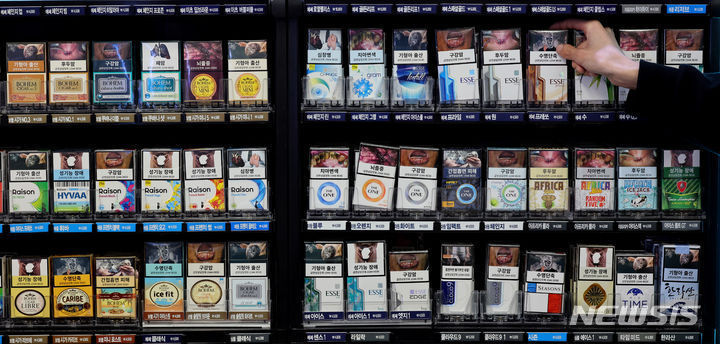
According to a report from Newsis on December 26th, Korean Tobacco (KT&G) and Philip Morris International (PMI) Korea announced that they will increase the profit margin for convenience store owners selling heated tobacco products (HTP). This is aimed at strengthening mutual relationships with store owners, while keeping consumer purchase prices unchanged. This means that the wholesale prices of these products will be reduced from current levels.


According to industry sources from convenience stores on the 26th, the Korean Tobacco and Philip Morris International (PMI) Korea have decided to increase the profit margin of their heated tobacco devices "Lil" and "IQOS" from the original 6% to 7% in convenience stores. The purchase price for consumers will remain unchanged.


During an audit by the Small and Medium Risk Enterprise Committee of the National Assembly's Industry, Trade, and Resources Committee in South Korea, some lawmakers pointed out that the profit margin for store owners of heated tobacco devices is only 6%, while the profit margin for heated tobacco pods is as high as 9%. In response, Do Hak-young, the Vice President of KT&G, stated that they will proactively adjust the profit margin.


British American Tobacco Korea (BAT Rothmans) stated that they are still in a wait-and-see period regarding profit margin adjustments. In addition, Japan Tobacco International Korea (JTI Korea) launched its e-cigarette product "Ploom" in October, but it is only being sold in select regions.


We welcome news tips, article submissions, interview requests, or comments on this piece.

Please contact us at info@2firsts.com, or reach out to Alan Zhao, CEO of 2Firsts, on LinkedIn


Notice

1.  This article is intended solely for professional research purposes related to industry, technology, and policy. Any references to brands or products are made purely for objective description and do not constitute any form of endorsement, recommendation, or promotion by 2Firsts.

2.  The use of nicotine-containing products — including, but not limited to, cigarettes, e-cigarettes, nicotine pouchand heated tobacco products — carries significant health risks. Users are responsible for complying with all applicable laws and regulations in their respective jurisdictions.

3.  This article is not intended to serve as the basis for any investment decisions or financial advice. 2Firsts assumes no direct or indirect liability for any inaccuracies or errors in the content.

4.  Access to this article is strictly prohibited for individuals below the legal age in their jurisdiction.


Copyright


This article is either an original work created by 2Firsts or a reproduction from third-party sources with proper attribution. All copyrights and usage rights belong to 2Firsts or the original content provider. Unauthorized reproduction, distribution, or any other form of unauthorized use by any individual or organization is strictly prohibited. Violators will be held legally accountable.

For copyright-related inquiries, please contact: info@2firsts.com


AI Assistance Disclaimer


This article may have been enhanced using AI tools to improve translation and editorial efficiency. However, due to technical limitations, inaccuracies may occur. Readers are encouraged to refer to the cited sources for the most accurate information.

We welcome any corrections or feedback. Please contact us at: info@2firsts.com

South Korea to regulate synthetic-nicotine e-liquids as tobacco from April 24
South Korea’s Health Ministry says amendments to the Tobacco Business Act will take effect on April 24, bringing synthetic-nicotine e-liquid vapes under the legal definition of tobacco. The shift extends cigarette-style rules to these products, including mandatory graphic warnings, sharply limited advertising channels, stricter vending-machine placement requirements, and a ban on use in smoke-free areas, with enforcement checks slated from late April.
Feb.03 by 2FIRSTS.ai
Azerbaijan parliament passes third-reading amendments introducing e-cigarette penalties, effective April 1, 2026
Azerbaijan’s Milli Majlis has adopted, in its third reading, amendments to the Code of Administrative Offences introducing fines and confiscation for the use of e-cigarettes and their components, as well as import, export, production, wholesale and retail sales, and storage for sale.
Mar.04 by 2FIRSTS.ai
BAT CEO Says 2026 Return to Growth Hinges on U.S. Enforcement, Highlights Oral Leadership
British American Tobacco said 2026 will mark a return to its mid-term growth algorithm, but CEO Tadeu Marroco stressed that deliverywill depend heavily on enforcement against illicit vapour products in the United States. Speaking at the FY2025 results call, he positioned Modern Oral as the company’s primary structural growth engine, reframed accelerating cigarette declines through “poly-usage,” and reinforced capital discipline with an expanded share buyback plan.
Feb.12
Myanmar announces ban on e-cigarettes, covering imports/exports, sales, possession and use
Myanmar’s Ministry of Health said it has received cabinet authorization to enforce an e-cigarette ban under the Essential Supplies and Services Law, listing prohibited acts including the import, export, sale, possession, storage, carrying, distribution and use of vaping products.
Feb.26 by 2FIRSTS.ai
2Firsts Holds Second PMTA Compliance Training in Shenzhen, Highlighting U.S. Regulatory Framework and Corporate Compliance Capabilities
2Firsts held its second U.S. PMTA compliance training in Shenzhen, providing a systematic overview of the U.S. regulatory framework for e-cigarettes and corporate compliance strategies. Nearly 20 industry professionals from manufacturing, e-liquid and supply-chain companies attended. Participants who passed the exam received compliance certification. Registration for the third training session will open soon, alongside customized corporate training programs.
Mar.09
PMI says Colorado ZYN plant build advances as first pouches hit market in 2025
Philip Morris International (PMI) is investing $600 million to build a ZYN nicotine pouch plant in Aurora, Colorado. While the facility is still under construction, PMI said production started in September 2025 and the first pouches made at the site have already gone to market.
Feb.10 by 2FIRSTS.ai