UK Government Proposes Strict Tobacco and E-Cigarette Act

Regulations by 2FIRSTS.ai
Mar.20.2024
UK Government Proposes Strict Tobacco and E-Cigarette Act
UK government proposes tobacco and e-cigarette bill banning under-15s from purchasing, aiming to combat health threats, sparking debate.

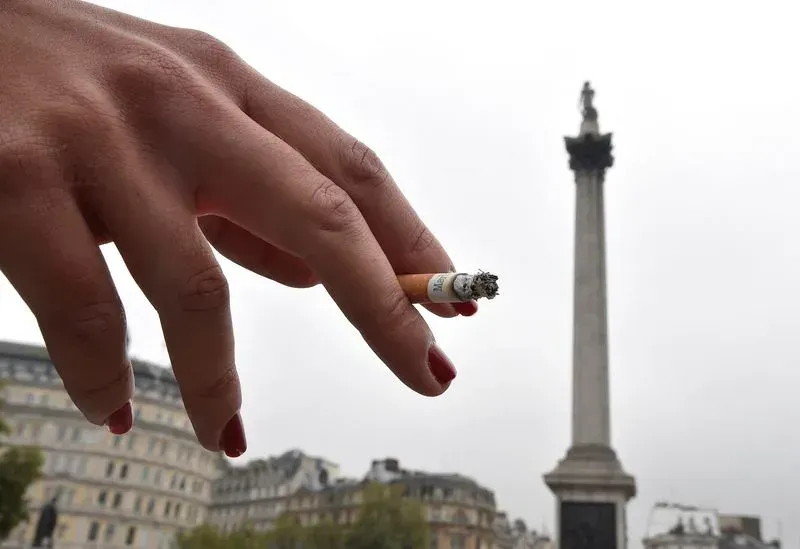
According to Reuters, the UK government proposed a bill during a parliamentary meeting on Wednesday, March 19th, that would ban the legal purchase of tobacco for children under the age of 15 this year. If passed without amendments, this bill, known as the Tobacco and e-Cigarette Bill, would be one of the strictest anti-smoking laws globally.


Prime Minister Rishi Sunak stated, "In order to build a better future for our children, we need to address the biggest preventable health threat - smoking." However, this bill has faced opposition from some members of the ruling party, including former Prime Minister Liz Truss.


Despite opposition, the bill is expected to pass, with the opposition Labour party indicating their support for the measure.


The UK government has stated that smoking causes approximately £17 billion (equivalent to $21.63 billion US dollars) in losses to the UK healthcare system and economy each year. At the same time, the sharp increase in e-cigarette use among teenagers and non-smokers has prompted the UK government to consider tightening regulations.


We welcome news tips, article submissions, interview requests, or comments on this piece.

Please contact us at info@2firsts.com, or reach out to Alan Zhao, CEO of 2Firsts, on LinkedIn


Notice

1.  This article is intended solely for professional research purposes related to industry, technology, and policy. Any references to brands or products are made purely for objective description and do not constitute any form of endorsement, recommendation, or promotion by 2Firsts.

2.  The use of nicotine-containing products — including, but not limited to, cigarettes, e-cigarettes, nicotine pouchand heated tobacco products — carries significant health risks. Users are responsible for complying with all applicable laws and regulations in their respective jurisdictions.

3.  This article is not intended to serve as the basis for any investment decisions or financial advice. 2Firsts assumes no direct or indirect liability for any inaccuracies or errors in the content.

4.  Access to this article is strictly prohibited for individuals below the legal age in their jurisdiction.


Copyright


This article is either an original work created by 2Firsts or a reproduction from third-party sources with proper attribution. All copyrights and usage rights belong to 2Firsts or the original content provider. Unauthorized reproduction, distribution, or any other form of unauthorized use by any individual or organization is strictly prohibited. Violators will be held legally accountable.

For copyright-related inquiries, please contact: info@2firsts.com


AI Assistance Disclaimer


This article may have been enhanced using AI tools to improve translation and editorial efficiency. However, due to technical limitations, inaccuracies may occur. Readers are encouraged to refer to the cited sources for the most accurate information.

We welcome any corrections or feedback. Please contact us at: info@2firsts.com

Special Report | Middle East Military Conflict Disrupts Global Air Corridors: Europe-Bound Vape Logistics Defy Seasonal Price Declines, Fuel Cost Risks Emerge
Escalating tensions involving Iran are disrupting air transit routes heavily used for China’s vape exports to Europe, preventing the usual post–Lunar New Year freight rate decline. While Europe-bound capacity reliant on Middle East hubs faces pressure, shipments to the United States remain largely unaffected for now. However, potential jet fuel price increases could broaden cost pressures globally.
Special Report
Mar.02
Louisiana lawmaker pushes bill to ban vape product sales within 300 feet of schools
A Louisiana lawmaker has introduced HB 302, which would prohibit businesses from selling vapor products within 300 feet of schools. The bill would measure the distance by a person walking on the sidewalk from the nearest point on school property to the nearest point of the business. It would also give the commissioner authority to modify how the distance is calculated, while maintaining the 300-foot limit.
Feb.26 by 2FIRSTS.ai
UK Smoke-Free Generation Plan Backed by Both Houses of Parliament
Plans to create a smoke-free generation have received backing from both Houses of Parliament in the UK. On Monday, peers approved the Tobacco and Vapes Bill at its third reading, with the measure aiming to prevent anyone currently aged 17 or younger from ever buying cigarettes.
Mar.11 by 2FIRSTS.ai
Malaysia anti-tobacco groups call for stronger enforcement as unregulated vapes remain on sale offline and online
Anti-tobacco groups in Malaysia say the continued sale of unregulated vapes in physical stores and the online availability of vape devices underline the need for comprehensive enforcement.
Mar.02 by 2FIRSTS.ai
Canadian Conservative MP’s Promotion of Zyn Draws Opposition From Local Nicotine Pouch Brand
Conservative MP Jamil Jivani’s public support for nicotine pouch brand Zyn has drawn attention on Canadian university campuses, but Imperial Tobacco, which makes the only similar Canadian product, Zonnic, said it does not support the promotion of an unauthorized competitor.
Mar.18 by 2FIRSTS.ai
The Volume Illusion: Measuring the Future of Nicotine with the Tools of the Past
As next-generation nicotine products become economically central rather than marginal, traditional volume-based metrics are increasingly unable to explain consumption, risk, and value. Units designed for a cigarette-based economy struggle to describe systems defined by delivery speed, pharmacokinetics, and adaptive user behavior. Drawing on financial reporting, regulation, and nicotine science, a fundamental question: can the future of nicotine still be measured using the tools of its past?
Feb.09 by Alan Zhao | 2Firsts Perspectives