Illegal Tobacco and E-Cigarettes Seized in Yorkshire Raids

Regulations by 2FIRSTS.ai
Aug.15.2024
Illegal Tobacco and E-Cigarettes Seized in Yorkshire Raids
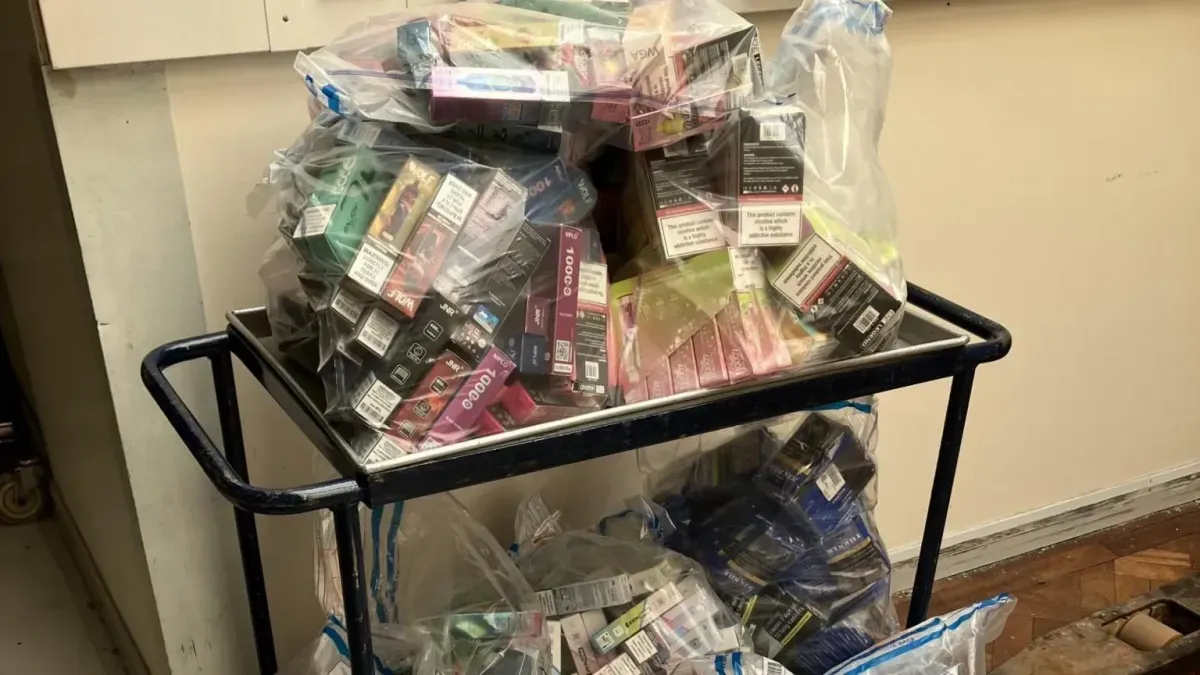
Illegal tobacco and e-cigarette products seized from three shops in East Yorkshire, UK, during a raid by trading standards team.

According to a report by the BBC on August 15th, three stores in East Yorkshire, England were found to have over 10,000 illegal tobacco and e-cigarette products.


The Trading Standards team of East Yorkshire Council conducted surprise inspections at shops in Beverley, Hornsea, and Driffield, seizing 6 kilograms of hand-rolling tobacco and a large quantity of illegal e-cigarettes in addition to cigarettes. The confiscated e-cigarettes included several brands such as JNR, WOLF, and ENJOY.


Member of Parliament Leo Hammond stated that illegal tobacco is often linked to wider criminal activities and those purchasing these products are supporting organized crime.


Authorities stated that these surprise inspections were part of the "CeCe Operation," a nationwide initiative aimed at combating illegal tobacco sales and distribution, which took place on July 29th.


Individuals found selling illegal tobacco may face fines of up to £10,000, confiscation of any tobacco products, revocation of tobacco selling privileges, or imprisonment.


We welcome news tips, article submissions, interview requests, or comments on this piece.

Please contact us at info@2firsts.com, or reach out to Alan Zhao, CEO of 2Firsts, on LinkedIn


Notice

1.  This article is intended solely for professional research purposes related to industry, technology, and policy. Any references to brands or products are made purely for objective description and do not constitute any form of endorsement, recommendation, or promotion by 2Firsts.

2.  The use of nicotine-containing products — including, but not limited to, cigarettes, e-cigarettes, nicotine pouchand heated tobacco products — carries significant health risks. Users are responsible for complying with all applicable laws and regulations in their respective jurisdictions.

3.  This article is not intended to serve as the basis for any investment decisions or financial advice. 2Firsts assumes no direct or indirect liability for any inaccuracies or errors in the content.

4.  Access to this article is strictly prohibited for individuals below the legal age in their jurisdiction.


Copyright


This article is either an original work created by 2Firsts or a reproduction from third-party sources with proper attribution. All copyrights and usage rights belong to 2Firsts or the original content provider. Unauthorized reproduction, distribution, or any other form of unauthorized use by any individual or organization is strictly prohibited. Violators will be held legally accountable.

For copyright-related inquiries, please contact: info@2firsts.com


AI Assistance Disclaimer


This article may have been enhanced using AI tools to improve translation and editorial efficiency. However, due to technical limitations, inaccuracies may occur. Readers are encouraged to refer to the cited sources for the most accurate information.

We welcome any corrections or feedback. Please contact us at: info@2firsts.com

RLX Technology Dropped From FTSE All-World as International Business Reaches 68.5% of Q2 Revenue
RLX Technology (NYSE: RLX) has been removed from the FTSE All-World Index, effective September 21. FTSE Russell records show RLX was already part of its global equity index universe by 2022, when its American depositary receipts were classified as China Large Cap securities. Trading volume rose to about 44.77 million shares on September 18, roughly 23 times the previous session's volume. RLX reported RMB1.0105 billion in second-quarter revenue, up 14.8% year over year, with international operations contributing 68.5%. The company also acquired a 51% stake in one of Western Europe's largest distributors of next-generation smoke-free and FMCG products in July.
Sep.22
Smoke-Free Business Hits 42% of Q2 Net Revenue as PMI’s First TNFD Report Covers Single-Use Electronics, Critical Raw Materials and IQOS Repairs
Philip Morris International has published its first report aligned with the Taskforce on Nature-related Financial Disclosures, bringing its electronics supply chain and the use and end-of-life stages of smoke-free devices and consumables into its nature-related assessment. PMI said its smoke-free business accounted for about 42% of total net revenues in the second quarter of 2026. The report says non-circular electronic products, particularly single-use items, can increase consumption of limited natural resources and also details an IQOS repair pilot. A 2040 circularity scenario tests assumptions including a 50% reduction in product waste-related costs, 10% raw-material savings and a 25% substitution rate for refurbished products versus new products.
Sep.23
SMOORE’s DOJO by VAPORESSO to Launch New Global Brand Identity on September 1
According to recent LinkedIn posts from people at VAPORESSO, SMOORE and a German distribution partner, vape brand DOJO will begin rolling out a new global brand identity on September 1, 2026, led by a redesigned handwritten logo. The new visual system will be gradually applied across product packaging, marketing materials and digital assets over the following months. Fabio Corsaro, Head of Marketing and Purchasing at MG Wesel GmbH, said the rebrand was related to trademark issues, but that explanation has not been publicly confirmed by DOJO, VAPORESSO or SMOORE. DOJO is currently promoting its Blast X product in Germany.
Aug.31
JAMA Study: U.S. Vape Directories Fail to Sustainably Curb Unlisted Sales as Product Shifts May Redistribute Brand Share 2Firsts Recommended
A study by CDC Foundation researchers found no sustained decline in e-cigarette sales across Alabama, Oklahoma and Louisiana, the first three U.S. states to implement e-cigarette directory laws. Louisiana initially saw a significant sales decline, followed by a rebound and a persistent reduction in product availability. Sales also shifted from nontobacco-flavored disposables toward prefilled cartridges, with Vuse Alto driving much of the increase in menthol cartridges. By April 2025, unlisted products still accounted for more than half of e-cigarette nicotine sales in all three states.
Sep.18
Earnings Analysis | CTIHK H1 2026 Revenue Falls 26.9% as Core Businesses Diverge and New Growth Drivers Remain to Be Proven
China Tobacco International (HK) reported a 26.9% revenue decline in H1 2026, while gross profit fell only 9.5%, revealing sharp divergence across its businesses. Tobacco leaf imports contracted, while leaf exports and Brazil operations expanded strongly. Cigarette exports faced China duty-free market transition, and new tobacco products remained small. Meanwhile, CTIHK continues to strengthen its role as an investment and financing platform, though major external deals have yet to emerge. 2Firsts examines what these shifts mean for its next growth drivers.
Capital Markets
Aug.24
South Korea Vape Strategies Diverge as BAT Reconsiders Exit and PMI Takes VEEV to About 14,000 Stores
BAT Rothmans says it previously considered exiting South Korea's vaping market because of competitive pressure from unregulated products, but is now reassessing conditions following changes to the country's nicotine regulatory framework. Vuse and other BAT vaping products remain available through existing distribution channels. The statement followed a South Korean media report that interpreted BAT's broader withdrawal from selected Vapour markets as a full exit from South Korea. Meanwhile, Philip Morris International launched VEEV inPRIME in the country in June and began expanding distribution to around 14,000 convenience stores and other retail channels in July. The contrasting moves highlight differing investment strategies as South Korea's regulated vaping market evolves.
Aug.14