Juul and Altria settlement payments begin as some users confirm payments received

Oct.25.2024
Juul and Altria settlement payments begin as some users confirm payments received
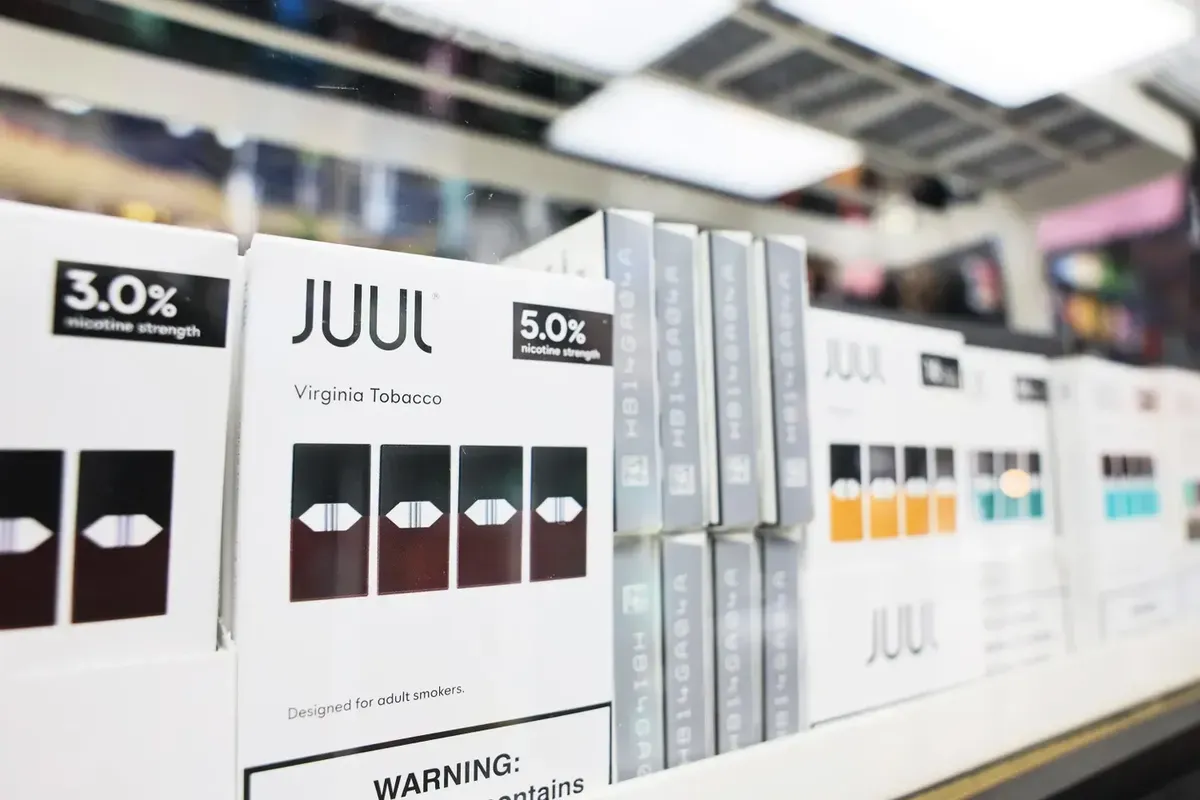
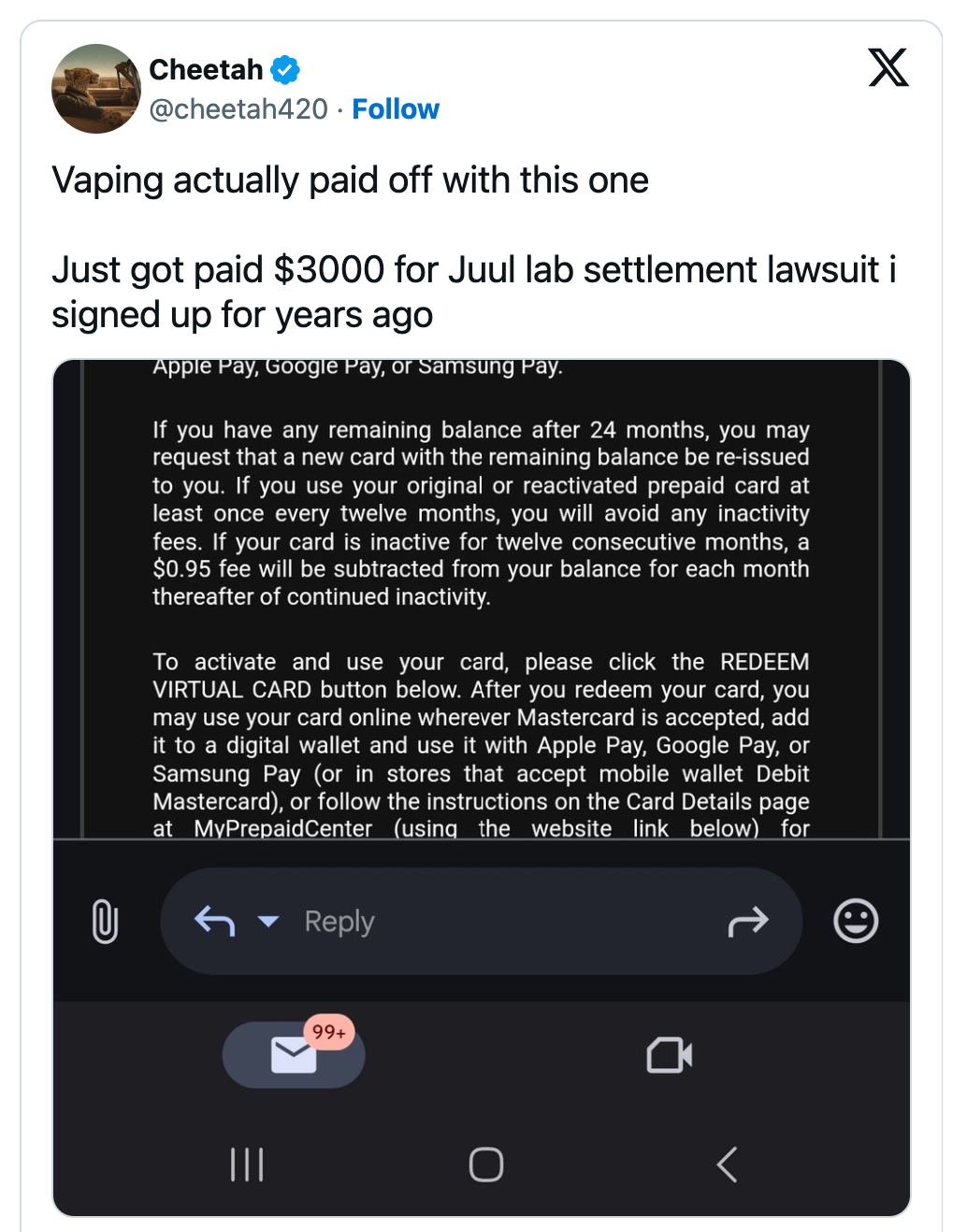
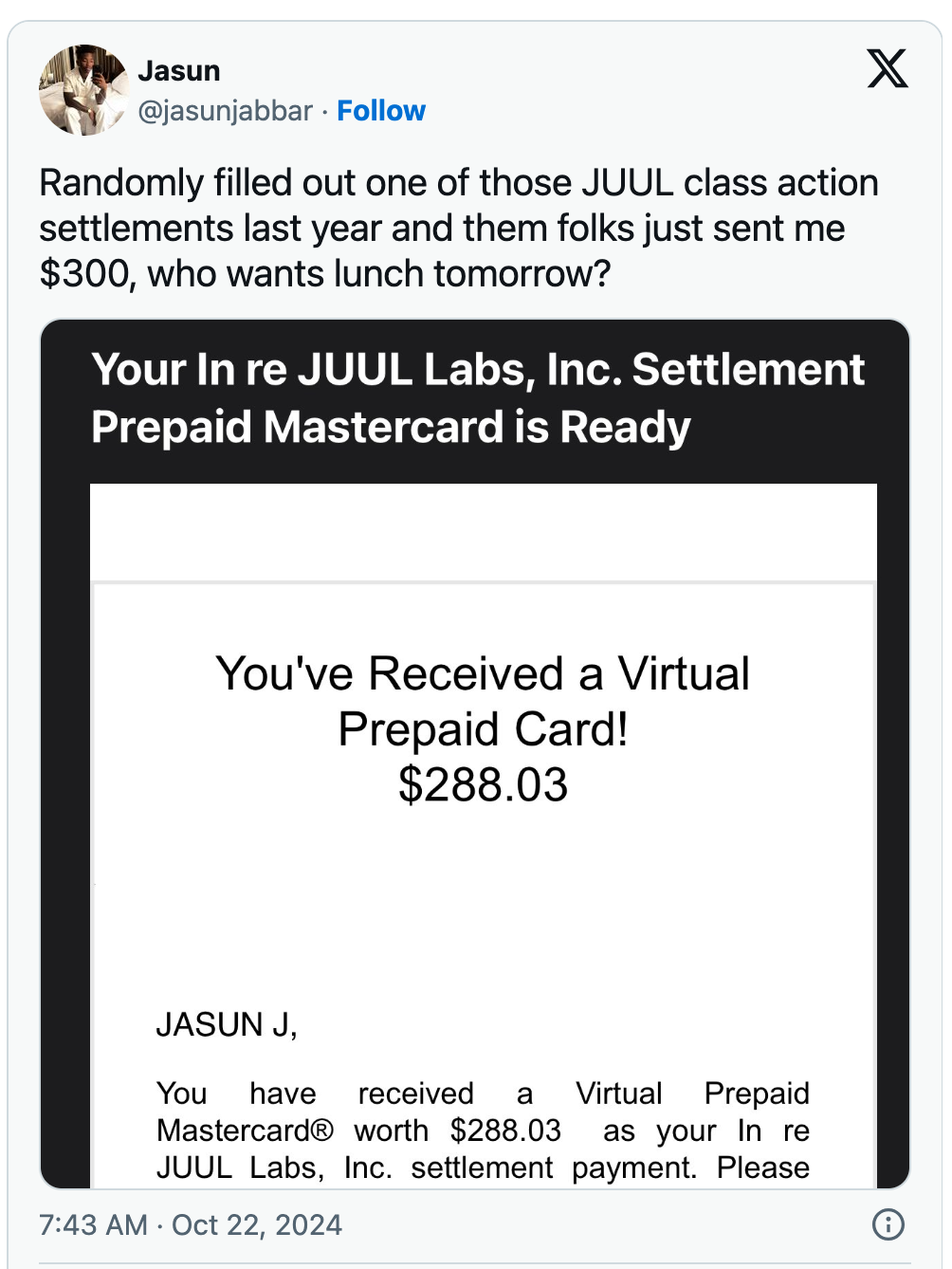
Juul Labs has begun issuing settlement payments following its agreement with Altria, with a total payout of $300 million. Users have reported on social media that they've received amounts ranging from a few hundred dollars to over $9,000.

The 2022 settlement agreement between e-cigarette company Juul and tobacco company Altria has begun to be paid out, with users on platforms such as Reddit and X claiming to have already received thousands of dollars in compensation, according to a 22 October report from Forbes.


The settlement amount for this case is $3 billion, to be paid jointly by Juul and Altria. The lawsuit alleged that consumers paid inflated prices for e-cigarettes, that Juul failed to accurately disclose the addictive and safety risks of its products, and that it engaged in illegal marketing to minors.


The payouts were approved earlier this month, according to the r/juul subreddit. Users have reported receiving amounts ranging from a few hundred dollars to over $9,000. Some X users have shared screenshots of their payments, while others are disappointed that they were not included in the settlement list. The settlement agreement includes consumers who purchased Juul products before 7 December 2022. Juul did not admit any wrongdoing in the settlement, and Altria has denied the allegations against it.
 

Juul and Altria settlement payments begin as some users confirm payments received
Some users of platform X claim to have received compensation | Image source: X


Juul and Altria settlement payments begin as some users confirm payments received
Some X platform users claimed to have received compensation | Image source: X


The amount of compensation is influenced by several factors, including the amount the claimant spent on Juul products, the time period of the purchase, and the age at the time of the purchase. Obviously, users who spent more during the qualifying period will receive more compensation.


The class action stems from more than 8,000 lawsuits filed against Juul by municipalities, school districts, indigenous tribes and individuals. In 2019, Juul stopped advertising in the US market and discontinued most of its flavoured products due to legal disputes and government sanctions.


Following a multi-state investigation into its marketing practices, the company reached a settlement agreement for nearly $4.4 billion, followed by another agreement for $3 billion. In 2018, Altria had invested nearly $13 billion in Juul, but pulled out of the investment last year and invested in another competing startup. Juul avoided bankruptcy through cost-cutting, massive layoffs and support from wealthy investors.


We welcome news tips, article submissions, interview requests, or comments on this piece.

Please contact us at info@2firsts.com, or reach out to Alan Zhao, CEO of 2Firsts, on LinkedIn


Notice

1.  This article is intended solely for professional research purposes related to industry, technology, and policy. Any references to brands or products are made purely for objective description and do not constitute any form of endorsement, recommendation, or promotion by 2Firsts.

2.  The use of nicotine-containing products — including, but not limited to, cigarettes, e-cigarettes, nicotine pouchand heated tobacco products — carries significant health risks. Users are responsible for complying with all applicable laws and regulations in their respective jurisdictions.

3.  This article is not intended to serve as the basis for any investment decisions or financial advice. 2Firsts assumes no direct or indirect liability for any inaccuracies or errors in the content.

4.  Access to this article is strictly prohibited for individuals below the legal age in their jurisdiction.


Copyright


This article is either an original work created by 2Firsts or a reproduction from third-party sources with proper attribution. All copyrights and usage rights belong to 2Firsts or the original content provider. Unauthorized reproduction, distribution, or any other form of unauthorized use by any individual or organization is strictly prohibited. Violators will be held legally accountable.

For copyright-related inquiries, please contact: info@2firsts.com


AI Assistance Disclaimer


This article may have been enhanced using AI tools to improve translation and editorial efficiency. However, due to technical limitations, inaccuracies may occur. Readers are encouraged to refer to the cited sources for the most accurate information.

We welcome any corrections or feedback. Please contact us at: info@2firsts.com

British American Tobacco to close South Africa cigarette plant by end-2026, citing illicit trade squeezing legal market
British American Tobacco South Africa (BATSA) said it will halt local production of factory-made cigarettes and close its manufacturing plant in Heidelberg, Gauteng by the end of 2026, shifting to an import-led supply model. The company said illicit cigarettes now account for about 75% of South Africa’s market, making local manufacturing “unsustainable” and putting around 230 jobs at risk.
Jan.16
Uruguay Weighs Ban on Nicotine Pouches as Health Ministry Warns of Growing Use
Nicotine pouches, promoted as flavored, smoke-free alternatives, are spreading in Uruguay despite the absence of a formal market. The Ministry of Public Health is considering banning them by decree and has raised the issue within Mercosur and at COP11. Health Minister Cristina Lustemberg warns that the industry is pushing new nicotine products to normalize consumption among youth.
Nov.20 by 2FIRSTS.ai
Spain’s new e-cigarette e-liquid tax, in force since April 1, raises €26 million through November
Spain’s Tax Agency monthly collection report shows the new tax on e-cigarette e-liquids, in force since April 1, raised €26 million through November, including €4 million in November. The levy began three months later than the usual fiscal timetable to allow the sector to adapt, making 2025 the first year in which vaping products are taxed under a specific category.
Dec.30 by 2FIRSTS.ai
Jordan Cuts Taxes on Heated Tobacco and E-cigarettes
Jordan has amended its 2025 Special Tax Law, introducing a package of tax reductions on heated tobacco products and electronic cigarettes. Published in the Official Gazette, the changes take effect Monday morning and include a 50% cut in taxes on heated tobacco devices, as well as significant reductions on e-cigarette hardware and liquids. The move is expected to have an immediate impact on retail prices.
Dec.22 by 2FIRSTS.ai
Korea’s MFDS sets 2026 plan to manage and disclose harmful constituents in tobacco products
South Korea’s Ministry of Food and Drug Safety (MFDS) said it has established its 2026 work plan to systematically manage harmful constituents in tobacco products and disclose related information under the Tobacco Harmfulness Management Act, which took effect in November 2025.
Jan.16 by 2FIRSTS.ai
VCU Tests Nearly 1,300 School-Confiscated Vapes, Finding Mislabeling, Mixed Cannabinoids and Contamination
New research from Virginia Commonwealth University (VCU) found microbial contamination — including coliform, a bacteria indicating fecal exposure — in some vaping devices confiscated from U.S. schools. However, researchers stressed that newly purchased, unopened vapes showed no such contamination. The findings point to risks linked to unregulated products and improper storage conditions, reinforcing the importance of regulated supply chains and product authentication.
News
Dec.01