Philippine Customs intercepts illegal shipment of marijuana e-cigarettes

Oct.11.2024
Philippine Customs intercepts illegal shipment of marijuana e-cigarettes
Philippine BOC intercepts shipment of e-cigarettes containing marijuana worth 250,116 pesos from the US at Clark port.

On October 10th, the Bureau of Customs in the Philippines announced on its official website that workers at the Port of Clark intercepted a shipment of e-cigarettes from the United States containing marijuana components. The shipment was valued at 250,116 pesos (approximately $4,400).

Philippine Customs intercepts illegal shipment of marijuana e-cigarettes
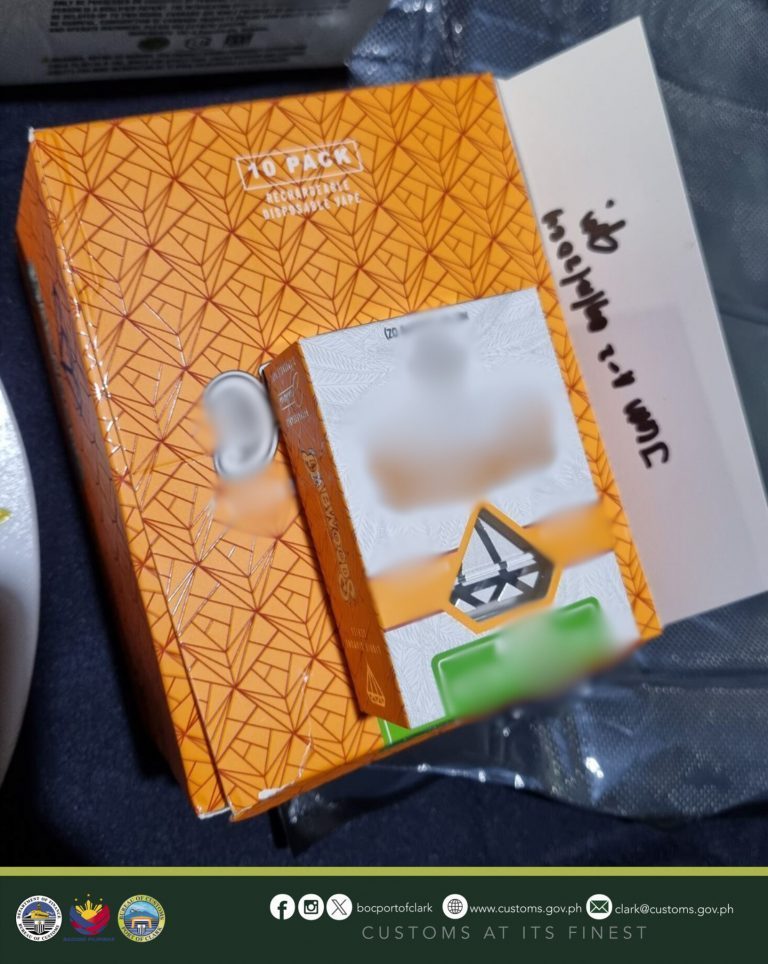
BOC seized one hundred e-cigarettes containing cannabis components | Image source: BOC official website


The shipment was declared as "label marker machines," but during X-ray inspection, it was flagged for further examination. Subsequently, customs officials discovered a total of 100 disposable e-cigarettes with different brands of marijuana.
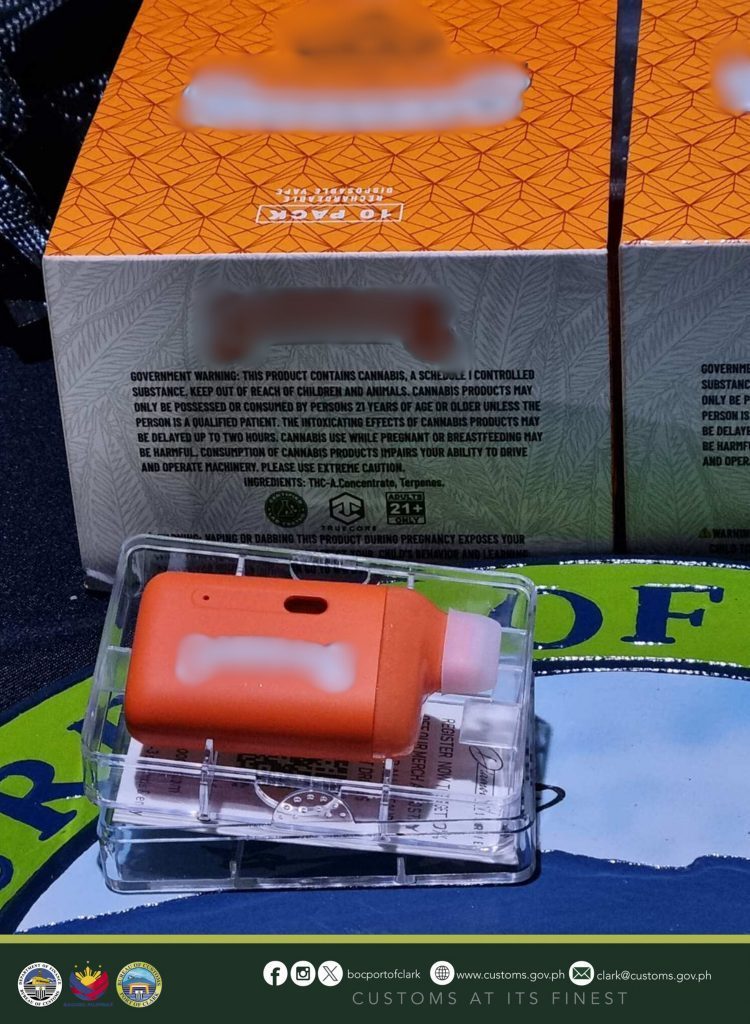
Philippine Customs intercepts illegal shipment of marijuana e-cigarettes
BOC seized a hundred e-cigarettes containing marijuana components. | Image source: BOC official website


After laboratory testing, samples were handed over to the Philippine Drug Enforcement Agency (PDEA) for further confirmation that the substances are dangerous drugs as described in RA No. 9165 amendment - marijuana.
Philippine Customs intercepts illegal shipment of marijuana e-cigarettes
BOC seizes one hundred e-cigarettes containing marijuana ingredients | Image source: BOC official website


Authorities have issued an order for the detention and seizure of the batch of goods due to violations of relevant provisions of the Customs Modernization and Tariff Act.


We welcome news tips, article submissions, interview requests, or comments on this piece.

Please contact us at info@2firsts.com, or reach out to Alan Zhao, CEO of 2Firsts, on LinkedIn


Notice

1.  This article is intended solely for professional research purposes related to industry, technology, and policy. Any references to brands or products are made purely for objective description and do not constitute any form of endorsement, recommendation, or promotion by 2Firsts.

2.  The use of nicotine-containing products — including, but not limited to, cigarettes, e-cigarettes, nicotine pouchand heated tobacco products — carries significant health risks. Users are responsible for complying with all applicable laws and regulations in their respective jurisdictions.

3.  This article is not intended to serve as the basis for any investment decisions or financial advice. 2Firsts assumes no direct or indirect liability for any inaccuracies or errors in the content.

4.  Access to this article is strictly prohibited for individuals below the legal age in their jurisdiction.


Copyright


This article is either an original work created by 2Firsts or a reproduction from third-party sources with proper attribution. All copyrights and usage rights belong to 2Firsts or the original content provider. Unauthorized reproduction, distribution, or any other form of unauthorized use by any individual or organization is strictly prohibited. Violators will be held legally accountable.

For copyright-related inquiries, please contact: info@2firsts.com


AI Assistance Disclaimer


This article may have been enhanced using AI tools to improve translation and editorial efficiency. However, due to technical limitations, inaccuracies may occur. Readers are encouraged to refer to the cited sources for the most accurate information.

We welcome any corrections or feedback. Please contact us at: info@2firsts.com

PMI Oral Products Chief Says Lack of Rules May Push Nicotine Pouch Market Into Illicit Trade
Nick Ricketts, President of Oral Products at Philip Morris International (PMI), told Logos Press that nicotine pouches should be brought under clear regulatory frameworks covering nicotine limits, flavor rules, age verification, sales controls and marketing standards, arguing that the absence of clear rules or blanket bans may push consumer demand into illegal or semi-legal channels.
Jul.06
2Firsts Data | China’s Vape Exports Rise 3.1% in H1 2026 as 6-Methyl Nicotine-Related Products Surge 65.2%
China’s vape exports showed resilience in the first half of 2026 after a short-term shock from China’s export rebate adjustment. But customs data points to more than a simple recovery: the structure of growth is changing. Vaping devices and atomization hardware emerged as the strongest growth driver, while nicotine-containing vaping products remained broadly stable. Meanwhile, nicotine substitute-related products represented by 6-methyl nicotine expanded rapidly, becoming a new category to watch for both industry and regulators. After the U.S. market went through a cycle of shortages, replenishment and inventory rebuilding in 2025, China’s vape supply chain is entering a new phase of reallocation.
Special Report
Jul.20
French Anti-Tobacco Group Questions PMI’s IQOS “Curiosity” Campaign Over Potential Youth Appeal
According to French anti-tobacco group Générations Sans Tabac, Philip Morris International’s (PMI) IQOS “Curiosity” campaign has drawn attention from public health advocates. The group argues that the campaign uses themes including curiosity, exploration and lifestyle branding that could increase interest among younger audiences. PMI has positioned IQOS as a key part of its smoke-free product strategy, while France maintains strict restrictions on tobacco and nicotine product marketing. The debate highlights ongoing tensions between heated tobacco branding strategies and public health concerns in Europe.
Jul.24
Kuwait Tightens Tobacco and Nicotine Rules, Bans Under-21 Sales and Extends Public Smoking Restrictions to Vapes and Heated Tobacco
Kuwait has issued a comprehensive new regulatory framework covering tobacco, e-cigarettes, heated tobacco and other nicotine products. Ministerial Decision No. 237 of 2026, signed by Health Minister Ahmad Al-Awadhi, will take effect on January 1, 2027. The rules prohibit sales to people under 21 and ban sales through websites, apps, social media and delivery services. E-cigarettes and heated tobacco products will also be treated as smoking in public and enclosed places where smoking is prohibited. Nicotine pouches and other oral nicotine products not registered as medicines are banned.
Regulations
Aug.17 by 2Firsts Perspectives
AIR Invests $20 Million in Greentank, Deepening Capital Ties Across the Vape Supply Chain
Nasdaq-listed AIR Global has invested $20 million in preferred shares of Canadian vaporization technology company Greentank, deepening a partnership established in 2023. AIR gains a board nomination right, access to new technologies, enhanced commercial terms and long-term supply assurances, while retaining an option to increase its stake. Greentank’s Quantum Chip platform powers Crown Switch and forms part of AIR’s planned U.S. PMTA dossier, linking capital investment more closely with product technology, regulatory evidence and supply-chain control.
Special Report
Jul.29
Alaska Warns 1,500 Tobacco Retailers Over Unauthorized Vapes and Nicotine Pouches
Alaska Attorney General Stephen J. Cox has sent notices to more than 1,500 tobacco retailers and distributors warning them against selling vape and nicotine pouch products that lack authorization from the U.S. Food and Drug Administration (FDA). According to the Alaska Department of Law, businesses were advised to verify products against FDA authorization databases and avoid selling unauthorized nicotine products. The action highlights how state-level enforcement is increasingly extending federal product authorization requirements to retail channels.
Jul.24